

Test and Tag Services Sydney: How Often Should Electrical Equipment Be Tested and Tagged?
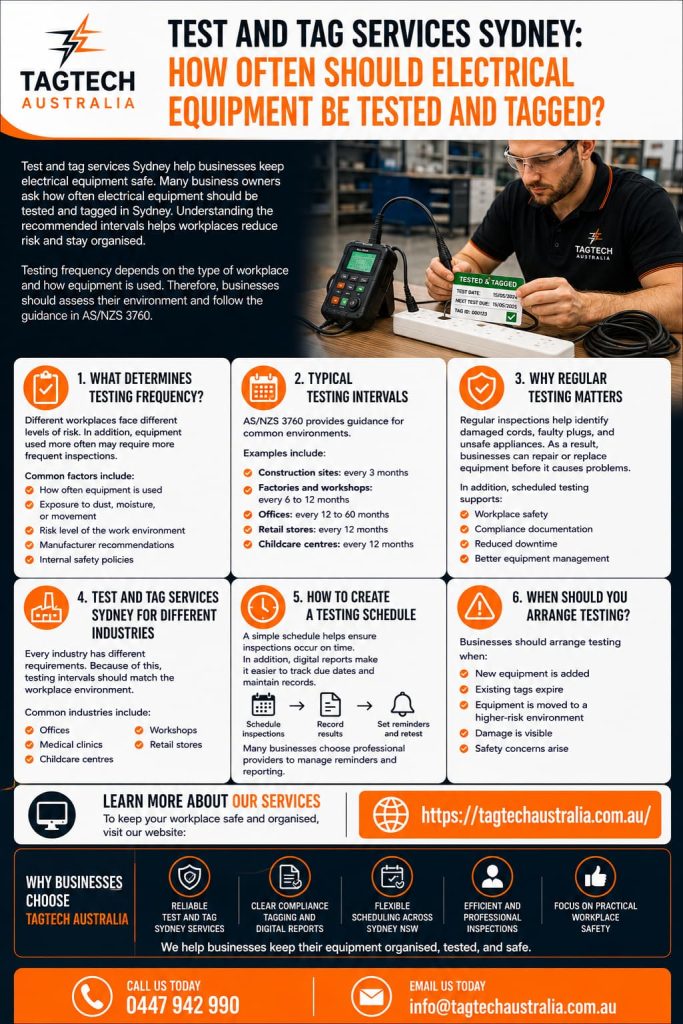
Test and Tag Services Sydney: How Often Should Electrical Equipment Be Tested and Tagged?
Test and tag services Sydney help businesses keep electrical equipment safe. Many business owners ask how often electrical equipment should be tested and tagged in Sydney. By following the right schedule, workplaces can reduce risk and stay organised.
The correct interval depends on the environment and the way people use equipment. Therefore, each business should review its risks and follow AS/NZS 3760. In addition, a planned schedule makes compliance easier. As a result, managers can avoid missed inspections.
What Factors Affect Testing Frequency?
Workplaces do not all face the same risks. For example, construction sites usually need more frequent inspections than offices. Likewise, equipment that travels between sites may wear out faster. Consequently, testing dates may differ.
Key factors include:
- Frequency of use
- Exposure to dust or moisture
- Movement and handling
- Workplace risk level
- Internal safety procedures
Common Testing Intervals
AS/NZS 3760 outlines recommended intervals for different environments. As a result, businesses can set realistic schedules. For instance, high-risk sites require shorter intervals. On the other hand, offices may need less frequent testing.
Typical examples include:
- Construction sites: every 3 months
- Workshops: every 6 to 12 months
- Offices: every 12 to 60 months
- Retail stores: every 12 months
- Childcare centres: every 12 months
Why Regular Testing Is Important
Regular inspections identify damaged cords, faulty plugs, and unsafe appliances. Consequently, businesses can repair issues before they disrupt operations. Moreover, early action helps prevent unexpected downtime. In addition, safer equipment supports daily work.
Scheduled testing also supports:
- Workplace safety
- Compliance records
- Reduced interruptions
- Better asset management
Test and Tag Services Sydney for Different Industries
Every industry uses equipment in a different way. Therefore, testing intervals should match actual conditions. In other words, a workshop may need more frequent inspections than a standard office. Furthermore, customised schedules help businesses stay compliant.
Common industries include:
- Offices
- Medical clinics
- Childcare centres
- Workshops
- Retail stores
How to Create a Testing Schedule
A practical schedule keeps inspections on time. Additionally, digital reports help track due dates and maintain records. As a result, managers can plan future visits with confidence. Meanwhile, reminder systems help prevent overdue tags.
Many businesses hire professional providers to manage reminders and reporting.
When Should You Book Testing?
Businesses should arrange testing when:
- New equipment is purchased
- Existing tags expire
- Equipment moves to a higher-risk area
- Visible damage appears
- Staff report safety concerns
Consequently, issues can be addressed early and safely.
Learn More About Our Services
To keep your workplace safe and organised, visit our website:
https://tagtechaustralia.com.au/
Why Businesses Choose Tagtech Australia
✔ Reliable test and tag Sydney services
✔ Clear compliance tagging and digital reports
✔ Flexible scheduling across Sydney NSW
✔ Efficient and professional inspections
✔ Focus on practical workplace safety
We help businesses keep their equipment organised, tested, and safe.
📞 Call 0447 942 990
📧 Email info@tagtechaustralia.com.au

Outbound References (for compliance context)
-
SafeWork NSW electrical safety resources
-
AS/NZS 3760 In-service safety inspection and testing of electrical equipment
Experience, Expertise, Authority, and Trust
This guide shows how test and tag Sydney supports workplace safety. Regular testing helps reduce risk by finding faults early. Each business should check its own setup when planning inspections.

