

Test and Tag Sydney for Optometry Practices
Test and Tag Sydney for Optometry Practices
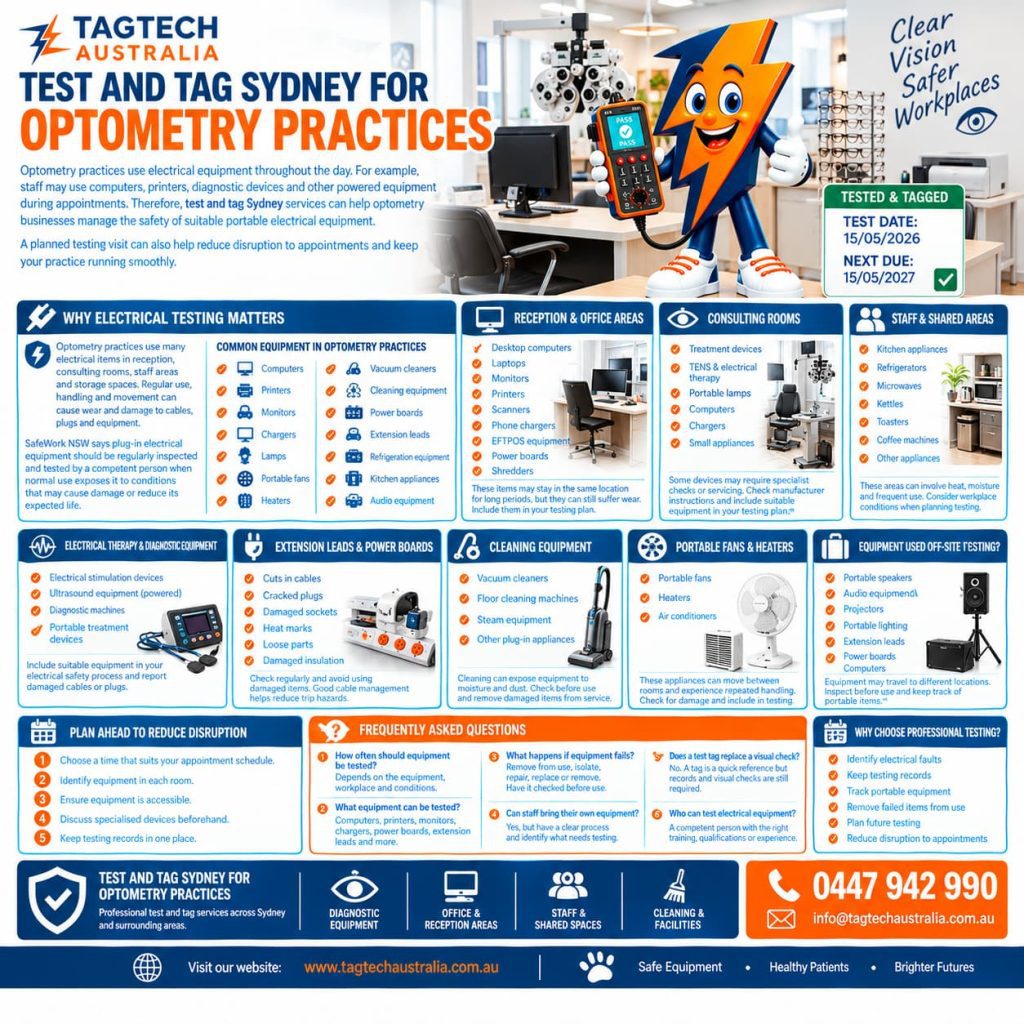
Optometry practices use electrical equipment throughout the day. For example, staff may use computers, printers, diagnostic devices and other powered equipment during appointments. Therefore, test and tag Sydney services can help optometry businesses manage the safety of suitable portable electrical equipment.
A busy practice also needs reliable equipment and clear records. However, staff may not always have time to check every item themselves. Professional testing helps businesses identify certain electrical safety issues and keep track of equipment that has been inspected.
In addition, a planned testing visit can help reduce disruption to appointments. With the right approach, optometry practices can manage electrical equipment safety while continuing to care for their patients.
Why Do Optometry Practices Need Electrical Equipment Testing?
Optometry practices use a range of electrical items in reception rooms, consulting rooms and staff areas. Over time, regular use can cause wear and damage.
For example, power cords may become worn, plugs may become damaged, and equipment may suffer knocks during cleaning or moving. As a result, staff should not rely on appearance alone to judge whether an item is safe.
SafeWork NSW explains that some electrical equipment needs regular inspection and testing when workplace conditions may cause damage or reduce its expected life.
For optometry practices, the need for testing depends on the equipment, how staff use it and the conditions around it. Therefore, a suitable testing plan should reflect the actual risks in the workplace.
What Equipment Can Be Tested in an Optometry Practice?
Optometry businesses often use portable electrical equipment across several work areas. The items that need testing depend on their type, condition and use.
Reception and Administration Equipment
Reception staff may use several electrical items every day. These can include:
Desktop computers and monitors
Printers and scanners
Telephone chargers and other suitable power supplies
Power boards
Extension leads
Portable fans
Other suitable plug-in office equipment
Because staff use these items regularly, it makes sense to include suitable equipment in the practice’s electrical safety checks.
Consulting Room Equipment
Consulting rooms may contain computers, monitors and specialised eye examination equipment. Staff should identify which items fall within the scope of in-service inspection and testing.
However, not every powered device should automatically be treated as ordinary portable electrical equipment. Some diagnostic devices may need specialist checks or servicing under the manufacturer’s instructions.
Therefore, practices should confirm the correct inspection requirements for specialised equipment before arranging testing.
Staff Rooms and Shared Areas
Staff kitchens and shared areas may contain items such as kettles, microwaves, fridges and portable appliances.
These items can experience regular handling, heat or moisture. Consequently, staff should consider their condition and how they are used when planning electrical safety checks.
Cleaning and Maintenance Equipment
Cleaning equipment may move between rooms and storage areas throughout the day. Examples include suitable vacuum cleaners, extension leads and other portable electrical items.
Furthermore, cords can suffer damage when staff move equipment around furniture or through doorways. Regular visual checks can help staff spot obvious damage between planned testing visits.
How Often Should an Optometry Practice Arrange Test and Tag?
There is no single testing interval that suits every optometry practice.
Instead, the appropriate interval depends on factors such as the equipment, its condition, the workplace environment and the risk of damage. SafeWork NSW provides guidance on when inspection and testing may be needed.
For example, equipment used in dry office areas may face different risks from equipment exposed to moisture, heat or physical damage.
Therefore, optometry businesses should review their equipment and work conditions before setting a testing schedule. A competent person can help determine suitable inspection and testing requirements.
Most importantly, do not assume that every item needs testing at the same interval. A risk-based approach helps a practice plan its checks more sensibly.
What Happens During Professional Test and Tag?
A professional test and tag visit involves more than attaching a tag to a plug.
First, the tester identifies the equipment that falls within the agreed scope. Next, they inspect suitable items for visible damage and other signs of wear.
Where required, the tester carries out the relevant electrical safety tests using appropriate equipment. The process helps identify faults that a visual check alone may not reveal.
If an item fails, staff should ensure it is removed from use and isolated so nobody uses it by mistake. The item should not return to service until the fault has been addressed and it has been confirmed safe, or the item has been replaced or permanently removed.
In addition, the business should keep clear records of the inspection and testing results. These records help staff identify tested equipment and understand what action may be needed next.
How Can Optometry Practices Reduce Disruption During Testing?
Optometry practices often work to appointment schedules. Therefore, planning the testing visit in advance can help staff manage the process.
Here are a few practical steps.
1. Choose a Suitable Time
First, consider the practice’s appointment schedule. A quieter period may make it easier for the tester to access equipment without interrupting patient care.
2. Identify Equipment in Each Room
Next, make a simple list of the equipment that needs inspection. Include reception, consulting rooms, staff areas and storage spaces where relevant.
This step also helps the tester understand the scope of work before arriving.
3. Arrange Access to Equipment
Staff should make sure suitable equipment is accessible. For example, they can clear items from around power boards and ensure portable devices can be checked safely.
However, staff should not disconnect or move specialised equipment unless the manufacturer’s instructions or the responsible person permits it.
4. Discuss Specialised Devices Beforehand
Some diagnostic equipment may have specific servicing or inspection requirements. Therefore, tell your test and tag provider about these devices before the visit.
This allows the provider to clarify what falls within the agreed scope and what may require a specialist.
5. Keep Records in One Place
Finally, store testing records where the practice manager or responsible staff can find them easily. Clear records also help when planning the next inspection.
Why Are Test Tags and Testing Records Important?
Test tags can provide a quick visual reference for equipment that has been inspected and tested. They may help staff identify the test status and the next inspection date, where applicable.
However, a tag alone does not prove that a workplace meets every electrical safety requirement. Staff should also maintain suitable records and follow up on any failed items.
Testing records may include:
A description or identification of the equipment
The date of inspection and testing
The name of the person who carried out the work
The test outcome
The next test date, where applicable
Details of faults or actions required
These records help optometry practices track their equipment over time. In addition, they make it easier to identify items that need attention before returning them to use.
What Should an Optometry Practice Do if Equipment Fails?
A failed test needs prompt action.
First, stop using the affected item. Then, disconnect or isolate it so staff cannot use it accidentally.
Next, arrange the correct repair or further assessment. Depending on the fault, the item may need repair and retesting, replacement or permanent removal.
Staff should also make a clear record of the issue and the action taken. This helps the practice track the outcome and reduces the risk of a faulty item returning to everyday use.
Most importantly, never ignore a failed result simply because the equipment still appears to work.
Benefits of Professional Test and Tag for Optometrists
A planned electrical testing program can support day-to-day safety management.
For example, professional testing can help an optometry practice:
Identify certain electrical faults and signs of damage.
Keep testing records organised.
Track equipment that has passed or failed.
Identify items that need repair or replacement.
Plan future inspections around workplace risks.
Reduce avoidable disruption through better scheduling.
In addition, a mobile service can make the process more convenient for practices that prefer testing to take place at their workplace.
However, test and tag is only one part of electrical safety. Practices should also maintain equipment properly, follow manufacturer instructions and arrange specialist servicing where required.
Frequently Asked Questions
1. Do optometry practices need test and tag?
Some electrical equipment used in workplaces requires regular inspection and testing, depending on its type, use and the risk of damage. Optometry practices should assess their equipment and workplace conditions to determine suitable requirements.
2. Does every item in an optometry practice need testing?
No. The requirements depend on the type of equipment and its use. Some specialised diagnostic devices may require specific checks or servicing rather than ordinary portable equipment testing.
3. How often should an optometry practice arrange testing?
The appropriate interval depends on the equipment, workplace conditions and risk. A competent person can help the practice establish a suitable schedule.
4. Can testing take place outside appointment hours?
Yes, testing can often be planned for a quieter period, subject to the provider’s availability. Discuss your appointment schedule when arranging the visit.
5. What happens if an item fails the test?
The item should be removed from use and isolated. It must not return to service until the fault has been addressed and the item has been confirmed safe, or it has been replaced or permanently removed.
6. Will our practice receive testing records?
Tagtech Australia can provide testing records for the agreed work. These records help your practice track the equipment inspected, the results and any required follow-up.
7. Does a test tag alone prove compliance?
No. A tag is a useful visual reference, but it does not prove that every electrical safety obligation has been met. Practices should keep appropriate records and manage any faults identified.
Why Businesses Choose Tagtech Australia
✔ Reliable test and tag Sydney services
✔ Clear compliance tagging and digital reports
✔ Flexible scheduling across Sydney NSW
✔ Efficient and professional inspections
✔ Focus on practical workplace safety
We help businesses keep their equipment organised, tested, and safe.
📞 Call 0447 942 990
📧 Email info@tagtechaustralia.com.au

Outbound References (for compliance context)
SafeWork NSW – Electrical Inspection and Testing
SafeWork NSW electrical inspection and testing guidanceSafeWork NSW – Electrical Work
SafeWork NSW electrical safety guidanceStandards Australia – AS/NZS 3760:2022
Standards Australia AS/NZS 3760:2022 information
Experience, Expertise, Authority, and Trust
This guide explains how testing and tagging Sydney can support wedding and event venues that use portable electrical equipment.
Tagtech Australia provides mobile test and tag services for businesses across Sydney. Our service focuses on practical electrical equipment testing, clear records and convenient on-site service.
Each venue should review its equipment, workplace conditions and electrical safety needs when planning inspections and testing.

