

Testing and Tagging Sydney for Printing Shop
Testing and Tagging Sydney for Printing Shops and Commercial Printers
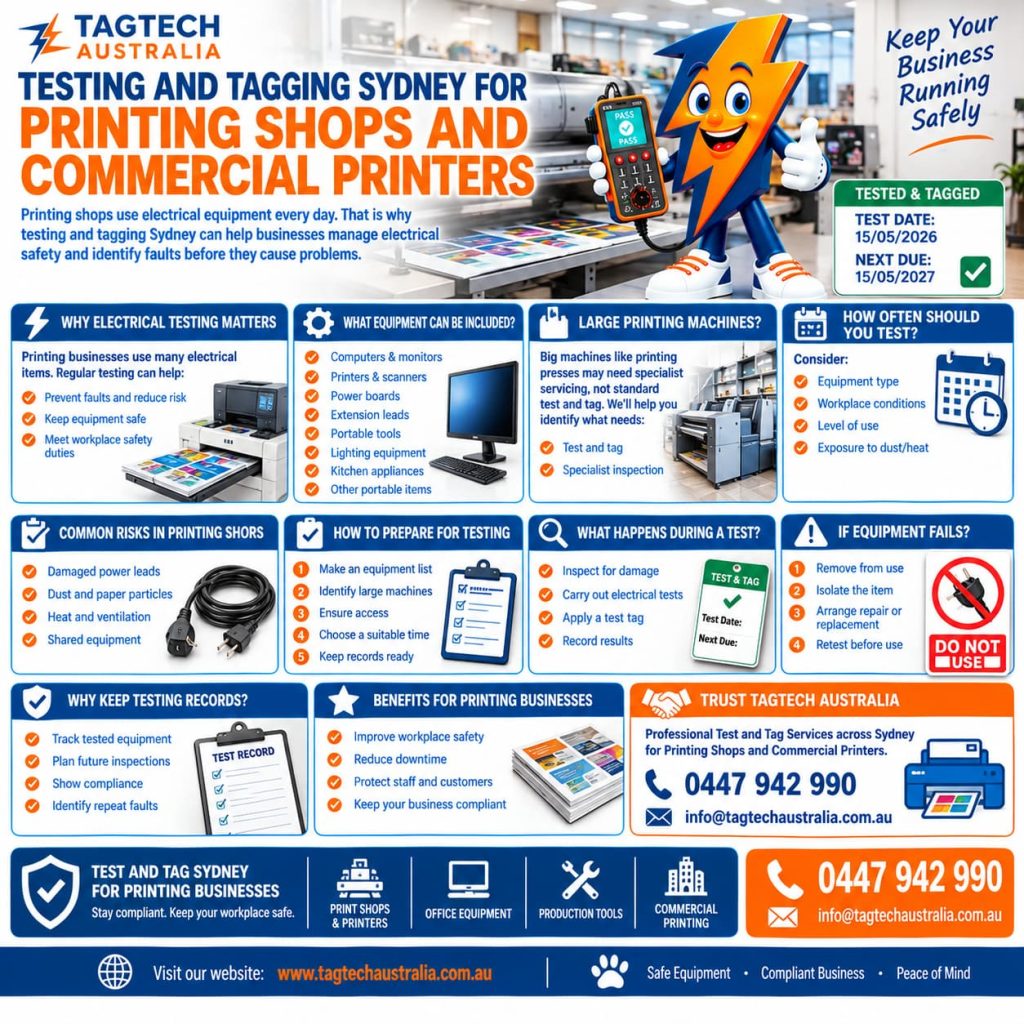
Printing shops use electrical equipment throughout the working day. Staff may operate computers, printers, finishing equipment and other tools. In addition, production areas often have equipment running for long periods.
As a result, electrical equipment can experience regular wear and damage. Cords may become worn, plugs may get damaged and portable equipment may develop faults.
That is where testing and tagging Sydney services can help. A suitable inspection and testing program helps printing businesses identify certain electrical faults and keep clear records of tested equipment.
However, not every machine has the same testing requirements. Large commercial printing machines may need specialist servicing or electrical inspections. Therefore, businesses should identify which items are suitable for ordinary portable equipment testing.
Tagtech Australia provides mobile test and tag services across Sydney. We help businesses manage suitable portable electrical equipment testing and maintain clear records.
Why Do Printing Shops Need Electrical Equipment Testing?
Printing businesses often use electrical equipment across several work areas. These may include reception desks, offices, print rooms, finishing areas and staff rooms.
Because staff use this equipment regularly, damage can occur over time. For example, power leads may become trapped, plugs may receive knocks and portable tools may suffer wear.
Furthermore, some equipment operates near heat, dust or moving machinery. These conditions can affect electrical equipment and should form part of a workplace risk review.
SafeWork NSW explains that workplaces need regular inspection and testing when equipment is used in conditions that may cause damage or reduce its expected life.
Therefore, printing businesses should review their equipment and work conditions. A suitable testing plan can help them manage electrical risks and identify equipment that needs attention.
What Equipment Can Be Included in Testing and Tagging?
The equipment included in a testing visit depends on its type, use and condition. Here are some common examples found in printing businesses.
Office and Administration Equipment
Most printing businesses use computers and other office equipment to manage orders, artwork and customer records.
Examples include:
Desktop computers and monitors
Laptop chargers
Printers and scanners
Phone chargers
Power boards
Extension leads
Portable fans
Other suitable plug-in office equipment
Staff often use these items throughout the day. Therefore, businesses should consider them when reviewing their electrical testing needs.
Portable Production Equipment
Some printing businesses use portable electrical tools during production and finishing work.
Depending on the equipment, examples may include:
Portable heat guns
Suitable handheld tools
Portable fans
Extension leads
Portable lighting
Other suitable portable electrical equipment
However, businesses should confirm that each item falls within the relevant testing scope. Some equipment may require a different inspection or maintenance process.
Finishing and Packing Areas
Finishing areas may contain equipment used to cut, bind, laminate, package or prepare printed products.
Staff may also use portable tools and electrical accessories in these areas. As a result, businesses should check how these items are used and whether they face regular movement or damage.
Large fixed machines may need specialist electrical inspection or servicing. Therefore, do not assume that every finishing machine can be tested as ordinary portable equipment.
Staff Rooms and Shared Areas
Staff areas may contain kettles, microwaves, fridges and other portable appliances.
These items can experience regular handling and everyday wear. In addition, some may operate near heat or moisture.
Businesses should consider their condition and use when planning electrical safety checks.
Do Large Commercial Printing Machines Need Test and Tag?
This is an important question for commercial printers.
Large printing presses, industrial cutters and other production machines may have different electrical inspection and maintenance requirements from portable equipment.
Some machines are fixed or connected as part of a larger installation. Others may require specialist servicing under manufacturer instructions.
Therefore, businesses should not assume that a standard test and tag visit covers every machine in the production area.
Instead, identify the equipment before booking. A provider can then confirm which suitable portable items fall within the agreed scope and which machines may need specialist attention.
This helps businesses avoid confusion and plan the right checks for their equipment.
How Often Should a Printing Business Arrange Testing and Tagging?
There is no single testing interval that applies to every printing business.
The suitable interval depends on the equipment, how staff use it and the conditions around it. For example, equipment exposed to dust, heat, vibration or physical damage may need closer attention.
SafeWork NSW provides guidance on electrical inspection and testing in workplaces. In addition, AS/NZS 3760:2022 covers in-service safety inspection and testing of electrical equipment.
Businesses should assess their equipment and workplace risks before setting a testing schedule. A competent person can help determine suitable inspection and testing intervals.
Most importantly, do not assume every item needs testing at the same frequency. A risk-based approach helps printing businesses plan their inspections more effectively.
What Happens During a Professional Test and Tag Visit?
A professional test and tag visit involves more than placing a tag on a power plug.
First, the tester identifies the equipment included in the agreed work. Next, they inspect suitable items for visible damage and signs of wear.
The tester then carries out the relevant electrical tests where required. These checks can identify certain faults that a visual inspection alone may not reveal.
If an item fails, staff should stop using it and ensure it is isolated. The item must not return to service until the fault has been addressed and it has been confirmed safe, or it has been replaced or permanently removed.
Finally, the tester records the results and applies a test tag where appropriate.
These records help businesses track tested equipment and identify items that need further attention.
Common Electrical Risks in Printing Businesses
Printing shops should pay attention to the conditions around their electrical equipment.
Damaged Power Leads
Staff may move portable equipment between work areas. During this process, cords can become trapped, stretched or damaged.
Therefore, staff should check visible leads and report damage as soon as they find it.
Dust and Production Areas
Some production areas may contain paper dust and other material from daily operations.
Businesses should follow equipment instructions and keep electrical equipment in suitable working conditions. They should also consider whether workplace conditions increase the risk of damage.
Heat and Ventilation
Some printing and finishing processes produce heat. In addition, equipment may need suitable ventilation to operate safely.
Staff should follow manufacturer instructions and report signs of overheating, damaged plugs or worn cords.
Shared Equipment
Several employees may use the same portable tools and electrical accessories.
Consequently, businesses should make it easy for staff to report faults. A clear reporting process helps prevent damaged equipment from remaining in use.
How Can Printing Shops Prepare for Testing?
A little planning can make a testing visit easier and reduce disruption to production.
1. Prepare an Equipment List
First, list the suitable portable electrical equipment used across the business.
Include office areas, production rooms, finishing areas and staff spaces. This gives the tester a clearer idea of the work involved.
2. Identify Large and Specialised Machines
Next, identify large printing presses, cutters and other specialised equipment.
Tell your provider about these machines before the visit. This helps clarify which items fall within the agreed testing scope and which may need specialist servicing.
3. Make Portable Equipment Accessible
Staff should make suitable equipment easy to reach.
For example, they can clear items from around power boards and make portable tools available for inspection. However, staff should not move heavy machinery or disconnect equipment unless they are authorised and it is safe to do so.
4. Choose a Suitable Time
Printing businesses may work to tight production deadlines.
Therefore, discuss your operating hours and production schedule before booking. A quieter period may make it easier to access equipment without interrupting important work.
5. Keep Testing Records
Finally, store testing records where the responsible person can access them.
Clear records help staff track test results, identify failed items and plan future inspections.
What Should Happen if Equipment Fails?
A failed test requires prompt action.
First, staff should stop using the affected item. Then, they should disconnect or isolate it so nobody can use it by mistake.
Next, arrange the correct repair or further assessment. Depending on the fault, the item may need repair and retesting, replacement or permanent removal.
Staff should also record the fault and the action taken. This creates a clear history of the equipment and its status.
Most importantly, never return a failed item to service until it has been confirmed safe.
Why Are Testing Records Important for Printing Businesses?
Testing records help printing businesses keep track of their portable electrical equipment.
They can show which items were inspected, when the work took place and whether the equipment passed or failed.
Records may include:
Equipment description or identification
Date of inspection and testing
Name of the person who carried out the work
Test result
Next test date, where applicable
Details of faults or required action
In addition, clear records help managers plan future testing and follow up on failed equipment.
A test tag can provide a useful visual reference. However, the tag alone does not prove that every electrical safety obligation has been met. Businesses should also keep suitable records and manage faults.
Benefits of Professional Testing and Tagging for Printing Shops
A planned testing program can help printing businesses manage suitable portable electrical equipment.
For example, professional testing can help businesses:
Identify certain electrical faults.
Find signs of damage and wear.
Keep testing records organised.
Track equipment that passes or fails.
Identify items that need repair or replacement.
Plan future inspections around workplace risks.
Reduce avoidable disruption through better scheduling.
In addition, a mobile service allows businesses to arrange testing at their own premises.
However, test and tag is only one part of electrical safety. Businesses should also maintain their machinery, follow manufacturer instructions and arrange specialist servicing where needed.
Frequently Asked Questions
1. Do printing shops need test and tag?
Some electrical equipment used in workplaces requires regular inspection and testing. The need depends on the equipment, how staff use it and the risk of damage.
2. Do commercial printing presses need test and tag?
Not every printing press falls within the same testing scope. Some large or fixed machines may require specialist inspection, maintenance or manufacturer servicing. Businesses should confirm the correct requirements for each machine.
3. What portable equipment can be tested in a printing shop?
Suitable items may include computers, chargers, power boards, extension leads and certain portable tools. The final scope depends on the equipment and its use.
4. How often should a printing business arrange testing?
The suitable interval depends on equipment type, workplace conditions and the risk of damage. A competent person can help determine an appropriate schedule.
5. Can testing take place outside production hours?
Testing can often be planned around a business’s production schedule, subject to availability. Discuss your operating hours with the provider before booking.
6. What happens if an item fails?
Staff should stop using the item and ensure it is isolated. It must not return to service until the fault has been addressed and it has been confirmed safe, or it has been replaced or permanently removed.
7. Will the printing business receive testing records?
Tagtech Australia provides testing records for the agreed work. These records help businesses track the equipment inspected and the results.
8. Does a test tag guarantee electrical safety?
No. A test tag is a visual reference to an inspection and test result. Businesses must also manage faults, maintain equipment and follow their wider electrical safety responsibilities.
Why Businesses Choose Tagtech Australia
✔ Reliable test and tag Sydney services
✔ Clear compliance tagging and digital reports
✔ Flexible scheduling across Sydney NSW
✔ Efficient and professional inspections
✔ Focus on practical workplace safety
We help businesses keep their equipment organised, tested, and safe.
📞 Call 0447 942 990
📧 Email info@tagtechaustralia.com.au
Outbound References (for compliance context)
SafeWork NSW – Electrical Inspection and Testing
SafeWork NSW electrical inspection and testing guidanceSafeWork NSW – Electrical Work
SafeWork NSW electrical safety guidanceStandards Australia – AS/NZS 3760:2022
Standards Australia AS/NZS 3760:2022 information
Experience, Expertise, Authority, and Trust
This guide explains how testing and tagging Sydney services can help printing businesses manage suitable portable electrical equipment. It covers common office and production equipment, workplace conditions and practical ways to prepare for testing.
Tagtech Australia provides mobile test and tag services for businesses across Sydney. Our work focuses on suitable equipment, clear testing records and practical arrangements for each workplace.
This article draws on SafeWork NSW guidance and the scope of AS/NZS 3760:2022. However, testing needs can vary between businesses. Owners and managers should assess their equipment, follow manufacturer instructions and arrange specialist servicing where required.

