

Test and Tag Services Sydney | Dance Studios
Test and Tag Services Sydney for Dance Studios
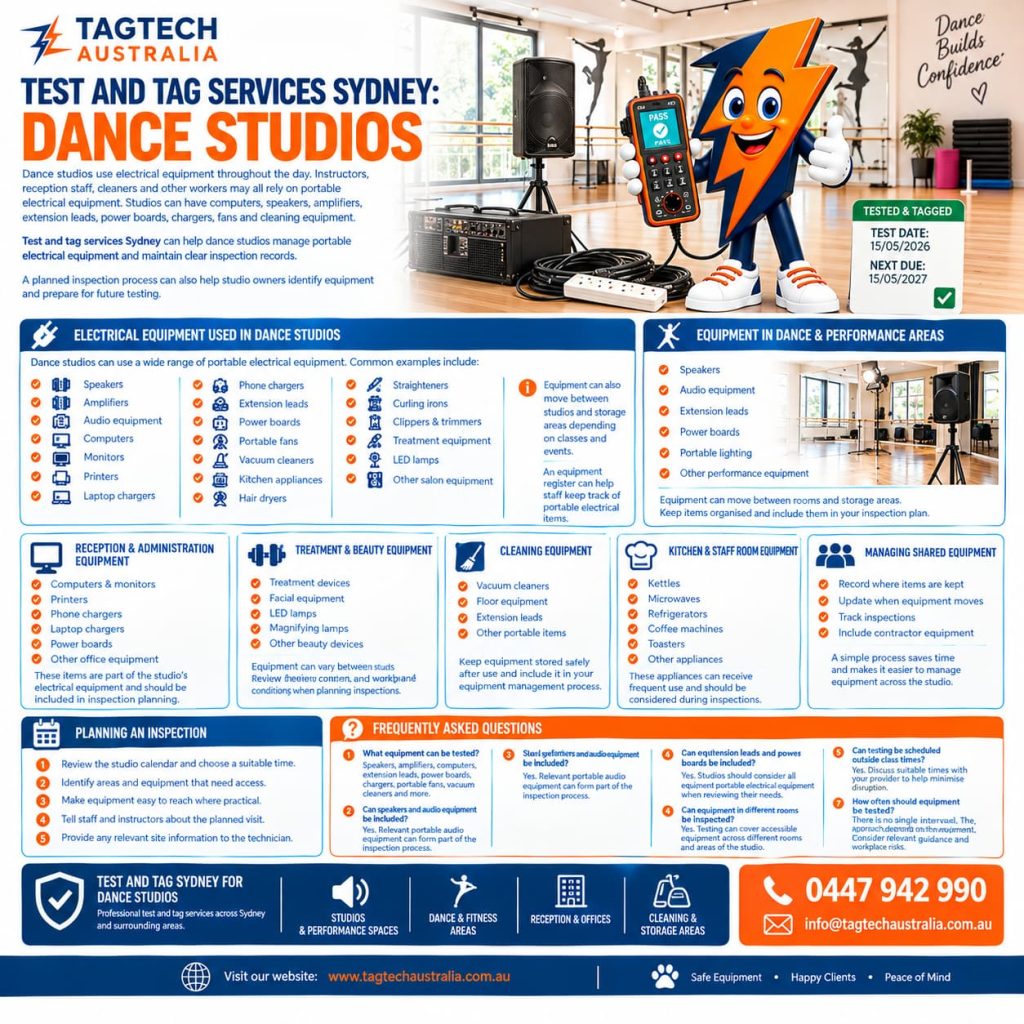
Dance studios use electrical equipment throughout the day. Instructors, reception staff, cleaners and other workers may all rely on portable electrical equipment.
Studios can have computers, speakers, amplifiers, extension leads, power boards, chargers, fans and cleaning equipment. Some items stay in one room, while others move between studios and storage areas.
Because equipment can be shared and moved regularly, keeping track of it can become difficult.
Test and tag services Sydney can help dance studios manage portable electrical equipment and maintain clear inspection records.
A planned inspection process can also help studio owners identify equipment and prepare for future testing.
Electrical Equipment Used in Dance Studios
Every dance studio has different equipment needs. However, many studios use a range of portable electrical items.
Common examples include:
- Speakers
- Amplifiers
- Audio equipment
- Computers
- Monitors
- Printers
- Extension leads
- Power boards
- Portable fans
- Chargers
- Portable lighting
- Vacuum cleaners
- Kitchen appliances
- Office equipment
Equipment can also move between studios depending on classes and events.
Therefore, an equipment register can help staff keep track of portable electrical items.
Audio Equipment and Speakers
Music is an important part of many dance classes.
Studios may use speakers, amplifiers, audio systems and other portable equipment during classes and performances.
Staff may move this equipment between rooms or store it after classes.
As a result, equipment can receive regular handling.
Keeping equipment organised can make it easier to identify items when an inspection takes place.
Extension Leads and Power Boards
Dance studios may need extension leads and power boards for audio equipment, computers, lighting and other appliances.
These items can also move between rooms.
Therefore, studios should include extension leads and power boards when reviewing their portable electrical equipment.
Staff should also keep cables organised and avoid creating unnecessary trip hazards in areas used by dancers.
Reception and Administration Equipment
Many dance studios have reception areas where staff manage enrolments, payments and class schedules.
Reception equipment can include:
- Computers
- Monitors
- Printers
- Laptop chargers
- Phone chargers
- Power boards
- Other office equipment
Although this equipment is separate from dance classes, it still forms part of the studio’s electrical equipment.
Therefore, reception areas should also be considered when planning an inspection.
Cleaning Equipment
Dance studios need regular cleaning to keep floors and other areas suitable for classes.
Staff or cleaners may use vacuum cleaners, extension leads and other portable electrical equipment.
These items can move between studios, reception areas and storage spaces.
Because cleaning equipment can receive frequent handling, businesses should include it in their equipment management process.
Equipment Used During Performances
Some dance studios hold performances, showcases and special events.
These events may require additional electrical equipment.
For example, studios may use portable speakers, audio equipment, lighting, chargers and extension leads.
After an event, staff may return equipment to storage or move it back to another studio.
For this reason, clear equipment records can help staff identify portable items.
Why Dance Studios Arrange Electrical Testing
Portable electrical equipment can experience regular use, movement and handling.
For example, speakers may move between studios. Extension leads can also be used in different areas. Cleaning equipment may travel throughout the facility.
Therefore, dance studios may arrange electrical inspection and testing as part of their workplace safety process.
The appropriate approach depends on factors such as the equipment, how it is used and the workplace environment.
For this reason, each studio should consider its own equipment, workplace conditions and applicable requirements when planning inspections.
Managing Shared Studio Equipment
Dance studios often have several instructors and staff members using the same equipment.
A speaker used for one class may be used by another instructor later in the day. Likewise, chargers, extension leads and other equipment can be shared.
Because of this, a simple equipment register can help studio managers keep track of portable electrical items.
A register may include:
- Equipment description
- Asset number
- Location
- Inspection date
- Inspection result
- Relevant notes
As a result, staff can find equipment information more easily.
Equipment Used by Contractors
Dance studios may use contractors for cleaning, maintenance or other services.
These contractors may bring portable electrical equipment onto the premises.
Therefore, studio managers should have clear procedures for equipment brought onto the site.
Where appropriate, contractors can follow the studio’s site requirements for portable electrical equipment.
This can help create a consistent approach across the workplace.
Keeping Your Dance Studio Organised
Electrical equipment can be spread across many parts of a dance studio.
Dance rooms may contain speakers and audio equipment. Reception areas can have computers and printers. Staff rooms may contain kitchen appliances.
Meanwhile, cleaning equipment can move between different areas.
Therefore, an organised inspection process can help studio owners maintain better equipment records.
Digital records can also make it easier to review completed inspections.
As a result, managers can find previous inspection information when planning future work.
Planning Testing Around Dance Classes
Dance studios often operate according to busy class schedules.
Classes may run throughout the afternoon and evening. Some studios may also operate on weekends or hold performances and special events.
Therefore, inspection timing can be important.
First, identify the rooms and equipment that need access.
Next, let instructors and staff know about the planned inspection.
Then, make portable equipment available where practical.
Finally, advise the testing provider about any access requirements.
Good preparation can help reduce disruption to classes and studio operations.
Benefits of Professional Test and Tag Services
Professional testing can give dance studios an organised way to manage portable electrical equipment.
A technician can work through accessible equipment across different areas of the studio.
This may include dance rooms, reception areas, offices, staff rooms and storage spaces.
Following an inspection, digital records can provide a useful record of completed work.
Test tags can also give staff a simple visual reference for equipment that has been inspected.
Furthermore, organised records can help managers plan future inspections.
Test and Tag Services Sydney for Dance Studios
Running a dance studio involves managing classes, instructors, students, bookings and equipment every day.
Electrical equipment is an important part of those daily operations.
Tagtech Australia provides professional test and tag services for dance studios, performing arts studios and other recreational facilities across Sydney.
We can inspect portable electrical equipment throughout your studio and provide clear test tags and digital inspection records.
Whether you operate a small local dance school or a larger performing arts facility, we can help you organise your portable electrical equipment inspection process.
Is your dance studio due for electrical equipment testing?
Call Tagtech Australia on 0447 942 990 or email info@tagtechaustralia.com.au to arrange test and tag services Sydney for your studio.
Frequently Asked Questions
What electrical equipment can dance studios have tested?
Dance studios may have speakers, amplifiers, computers, extension leads, power boards, chargers, portable fans, vacuum cleaners and other portable electrical equipment inspected.
Can speakers and audio equipment be included?
Yes. Relevant portable audio equipment can form part of the studio’s electrical equipment inspection process.
Should extension leads and power boards be included?
Yes. Studios should consider all relevant portable electrical equipment when reviewing their inspection needs.
Can equipment in different dance rooms be inspected?
Yes. Testing can cover accessible portable electrical equipment across different rooms and areas of the studio.
Can testing be scheduled outside class times?
Yes. Dance studios can discuss suitable inspection times with their testing provider to help minimise disruption to classes.
Can performance equipment be included?
Yes. Portable electrical equipment used for performances and special events can be considered as part of the studio’s equipment management process.
How often should dance studio equipment be tested?
There is no single testing interval that applies to every item or every workplace.
The appropriate approach can depend on the equipment, how it is used and the workplace environment. Studios should consider relevant guidance, workplace risks and applicable requirements when planning inspections.
Why Businesses Choose Tagtech Australia
✔ Reliable test and tag Sydney services
✔ Clear compliance tagging and digital reports
✔ Flexible scheduling across Sydney NSW
✔ Efficient and professional inspections
✔ Focus on practical workplace safety
We help businesses keep their equipment organised, tested, and safe.
📞 Call 0447 942 990
📧 Email info@tagtechaustralia.com.au
Outbound References (for compliance context)
SafeWork NSW electrical safety resources
AS/NZS 3760 In-service safety inspection and testing of electrical equipment
Experience, Expertise, Authority, and Trust
Dance studios can have many portable electrical items operating throughout the day.
Audio equipment may move between rooms. Extension leads and chargers can also be shared between instructors. Meanwhile, cleaning equipment may move throughout the facility.
For this reason, an organised inspection process can help studio managers maintain better records of their portable electrical equipment.
Tagtech Australia provides test and tag services across Sydney and surrounding areas. Our team helps businesses manage portable electrical equipment and maintain clear inspection records.
This article provides general information about electrical equipment testing. Each dance studio should consider its own equipment, workplace conditions, risk assessment and applicable requirements when planning an inspection program.

