

Test and Tag Services Sydney: Do Universities and Colleges Need Test and Tag?
Test and Tag Services Sydney: Do Universities and Colleges Need Test and Tag?
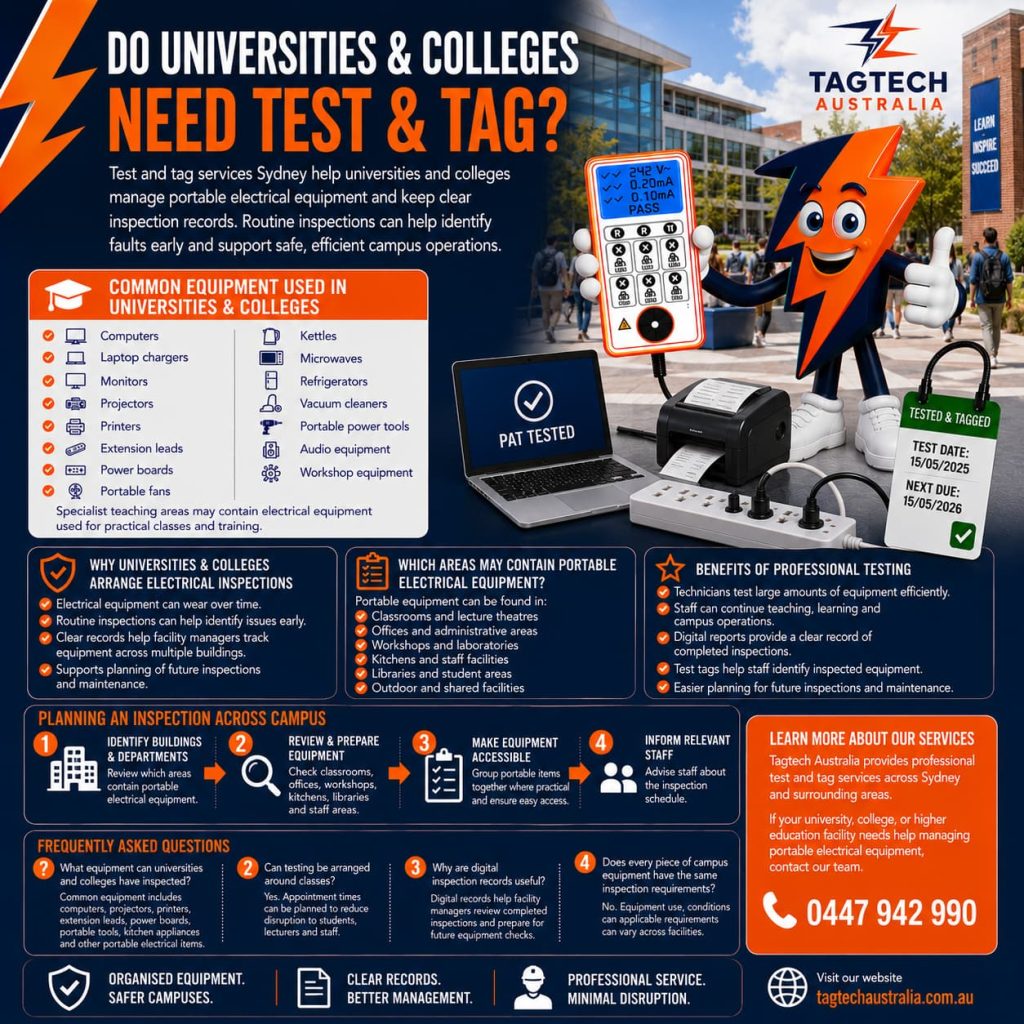
Test and tag services Sydney help universities and colleges manage portable electrical equipment and keep clear inspection records. Large campuses can contain classrooms, offices, libraries, laboratories, workshops, kitchens, and shared facilities. As a result, keeping track of electrical equipment can become an important part of workplace management.
Students, lecturers, administration teams, cleaners, and maintenance staff may all use electrical equipment throughout the day. For example, classrooms can contain computers, projectors, chargers, and audio equipment. Meanwhile, workshops may use portable tools, extension leads, and other appliances.
Test and Tag Services Sydney for Universities and Colleges
Universities and colleges use many types of portable electrical equipment across their campuses. Because equipment can move between rooms and departments, staff may find it difficult to maintain accurate records without a clear system.
Common equipment includes:
- Computers
- Laptop chargers
- Monitors
- Projectors
- Printers
- Extension leads
- Power boards
- Portable fans
- Kettles
- Microwaves
- Refrigerators
- Vacuum cleaners
- Portable power tools
- Audio equipment
- Workshop equipment
In addition, specialist teaching areas may contain electrical equipment used for practical classes and training.
Keeping equipment records organised can make future inspections easier.
Why Universities and Colleges Arrange Electrical Inspections
Electrical equipment can experience normal wear through regular use. Over time, cords, plugs, and connectors may suffer damage from movement, storage, or repeated handling.
Therefore, routine inspections can help identify equipment that needs attention. A planned approach can also help facility managers keep track of equipment across different buildings.
Furthermore, large campuses may have several departments using electrical equipment every day. Clear records can make it easier to review previous inspections and plan future work.
Which Areas May Contain Portable Electrical Equipment?
Electrical equipment can appear throughout a university or college campus. For instance, classrooms may contain computers, projectors, chargers, and power boards.
Similarly, administration areas can contain computers, monitors, printers, and other office equipment. Workshops may use portable power tools, while kitchens can contain kettles, microwaves, and refrigerators.
Libraries and student areas may also contain computers, chargers, printers, and other portable appliances. However, the equipment and inspection requirements can vary between facilities.
Benefits of Professional Testing
Professional testing can help large campuses manage equipment inspections more efficiently. Instead of asking teaching or administration staff to manage the process, the university or college can arrange for a technician to inspect the equipment.
Following the inspection, digital reports can provide a clear record of the work completed. In addition, test tags can help staff identify equipment that has been inspected.
As a result, facility managers can have a clearer record when planning future inspections and maintenance.
Planning an Inspection Across a Large Campus
Large campuses require some preparation before an inspection. First, identify the buildings and departments that contain portable electrical equipment.
Next, review equipment in classrooms, offices, workshops, kitchens, libraries, laboratories, and staff areas. Where practical, make equipment easy for the technician to access.
Finally, tell relevant staff about the inspection schedule. This preparation can help the inspection run smoothly while reducing disruption to classes and campus activities.
Frequently Asked Questions
What equipment can universities and colleges have inspected?
Universities and colleges commonly use computers, projectors, printers, extension leads, power boards, portable tools, kitchen appliances, and other portable electrical equipment.
Can testing be arranged around classes?
Yes. For example, a university or college can discuss suitable appointment times with its testing provider and choose periods that reduce disruption to students and staff.
Why are digital inspection records useful?
Digital records provide an organised way to review completed inspections. Furthermore, they can help facility managers prepare for future equipment checks.
Does every piece of campus equipment have the same inspection requirements?
No. Equipment use, workplace conditions, and applicable requirements can vary. Therefore, each facility should consider its own circumstances when planning an inspection program.
Learn More About Our Services
Tagtech Australia provides professional test and tag services across Sydney and surrounding areas.
If your university, college, or higher education facility needs help managing portable electrical equipment, contact our team.
📞 0447 942 990
📧 info@tagtechaustralia.com.au
Why Businesses Choose Tagtech Australia
✔ Reliable test and tag Sydney services
✔ Clear compliance tagging and digital reports
✔ Flexible scheduling across Sydney NSW
✔ Efficient and professional inspections
✔ Focus on practical workplace safety
We help businesses keep their equipment organised, tested, and safe.
📞 Call 0447 942 990
📧 Email info@tagtechaustralia.com.au
Outbound References (for compliance context)
SafeWork NSW electrical safety resources
AS/NZS 3760 In-service safety inspection and testing of electrical equipment
Experience, Expertise, Authority, and Trust
Universities and colleges manage electrical equipment across many different environments. For that reason, a clear inspection process can help facility teams maintain better equipment records.
This article provides general information about electrical equipment inspections. However, every facility should assess its own equipment, workplace conditions, and applicable requirements when developing its inspection program.
This guide provides general information about electrical equipment inspections. However, every school should consider its own equipment, workplace conditions, and applicable requirements when planning its inspection program.

