

Test and Tag Sydney | Hair & Beauty Salons
Test and Tag Sydney: Hair & Beauty Salons
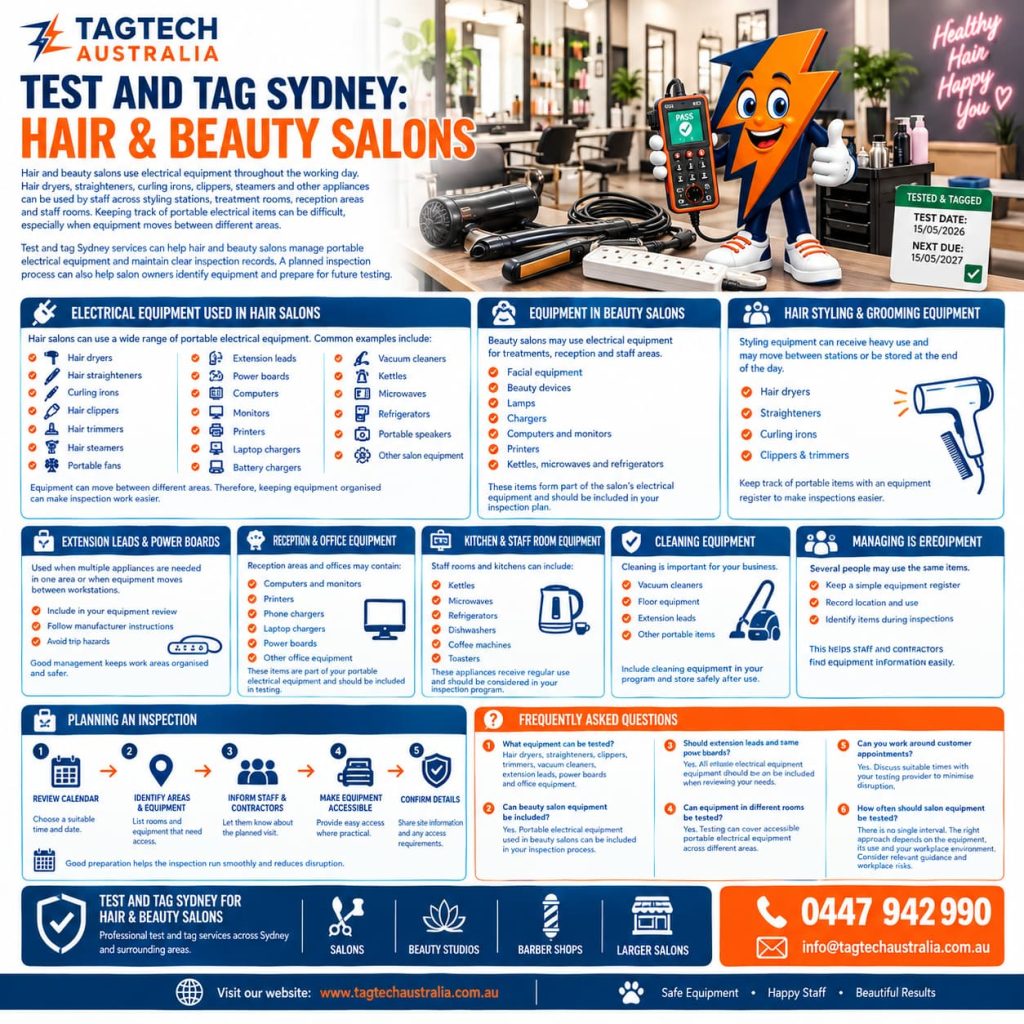
Hair and beauty salons use electrical equipment throughout the working day. Hair dryers, straighteners, clippers, hair steamers and other appliances can be used by staff across busy salon areas.
Salons may also have computers, chargers, power boards, extension leads, vacuum cleaners and kitchen appliances.
Because equipment is handled often, keeping track of portable electrical items can become difficult.
Test and tag Sydney services can help hair and beauty salons manage portable electrical equipment and maintain clear inspection records.
A planned inspection process can also help salon owners identify equipment and prepare for future testing.
Electrical Equipment Used in Hair Salons
Hair salons can use many portable electrical appliances.
For example, stylists may use hair dryers, straighteners, curling irons, clippers and other grooming equipment throughout the day.
Common electrical equipment can include:
- Hair dryers
- Hair straighteners
- Curling irons
- Hair clippers
- Hair trimmers
- Hair steamers
- Portable fans
- Extension leads
- Power boards
- Computers
- Monitors
- Phone chargers
- Vacuum cleaners
- Kitchen appliances
Equipment can also move between different workstations.
Therefore, keeping equipment organised can make inspection work easier.
Electrical Equipment Used in Beauty Salons
Beauty salons can have a different mix of portable electrical equipment.
For instance, staff may use facial equipment, beauty devices, lamps, chargers and other portable appliances.
Reception areas may also contain computers, monitors and printers.
Meanwhile, staff rooms may contain kettles, microwaves and refrigerators.
As a result, salon owners should consider the whole workplace when reviewing their electrical equipment.
Hair Dryers, Clippers and Styling Equipment
Hair styling equipment can receive heavy use during a busy working day.
Staff may use the same appliances many times. They may also move equipment between stations or store it at the end of the day.
For this reason, salon owners should keep track of portable electrical items.
An equipment register can help identify each item and its location.
It can also make it easier to prepare equipment before an inspection.
Extension Leads and Power Boards
Salons may use extension leads and power boards when several appliances are needed in one area.
These items can also move between workstations.
Therefore, they should be included when the business reviews its portable electrical equipment.
Staff should also use equipment according to the manufacturer’s instructions and avoid creating unnecessary trip hazards.
Good equipment management can help keep work areas organised.
Reception and Office Equipment
Many salons have a reception desk where staff manage bookings, payments and customer records.
This area may contain:
- Computers
- Monitors
- Printers
- Phone chargers
- Laptop chargers
- Power boards
- Other office equipment
Although these items are not used for hair or beauty treatments, they are still part of the salon’s electrical equipment.
Therefore, managers should include reception and office areas when planning inspections.
Kitchen and Staff Room Equipment
Salon staff may also use electrical appliances in kitchens and staff rooms.
Common examples include:
- Kettles
- Microwaves
- Refrigerators
- Coffee machines
- Toasters
These appliances may receive regular use.
As a result, they should not be overlooked when the business reviews its portable electrical equipment.
Cleaning Equipment
Salons need regular cleaning throughout the day.
Staff or cleaners may use vacuum cleaners and other portable electrical equipment. These items can move between styling areas, treatment rooms and reception spaces.
Because cleaning equipment can receive frequent handling, businesses should include it in their equipment management process.
Furthermore, equipment should be stored safely after use.
Why Salons Arrange Electrical Testing
Hair and beauty salons can have many portable electrical appliances operating throughout the day.
Some equipment receives frequent handling. Other equipment may remain in one location for longer periods.
Therefore, businesses may arrange electrical inspection and testing as part of their workplace safety process.
The appropriate approach depends on factors such as the equipment, how it is used and the workplace environment.
For this reason, salon owners should consider their own workplace conditions and applicable requirements when planning inspections.
Managing Shared Salon Equipment
Several employees may share electrical equipment during the day.
For example, one stylist may use a hair dryer before another staff member uses the same appliance.
Likewise, vacuum cleaners, chargers and other equipment may be shared between workers.
Because of this, a clear equipment register can help salon managers keep track of portable electrical items.
The register may include:
- Equipment description
- Asset number
- Location
- Inspection date
- Inspection result
- Relevant notes
As a result, staff can find equipment information more easily.
Equipment Used by Contractors
Some salons use contractors for cleaning, maintenance or other services.
These contractors may bring portable electrical equipment onto the premises.
Therefore, salon managers should have clear procedures for equipment brought onto the site.
Where appropriate, contractors can follow the salon’s site requirements for portable electrical equipment.
This can help create a more consistent approach across the workplace.
Keeping Your Salon Equipment Organised
A busy salon can have electrical equipment across many areas.
Styling stations may contain dryers and straighteners. Treatment rooms may contain beauty equipment. Reception areas may have computers and printers.
Meanwhile, staff rooms can contain kitchen appliances.
Therefore, an organised inspection process can help salon owners keep better records.
Digital records can also make it easier to review completed inspections.
As a result, managers can quickly check equipment information when planning future work.
Planning Test and Tag Around Salon Operations
Salons need to keep serving customers during normal business hours.
Therefore, the timing of an inspection can be important.
First, identify the areas and equipment that need access.
Next, let staff know about the planned inspection.
Then, make portable equipment available where practical.
Finally, advise the testing provider about any access requirements.
Good preparation can help reduce disruption to customers and staff.
Benefits of Professional Test and Tag Services
Professional testing can give salons an organised way to manage portable electrical equipment.
A technician can work through equipment across different areas of the business.
This may include styling stations, treatment rooms, reception areas, kitchens and staff rooms.
Following an inspection, digital records can provide a clear record of completed work.
Test tags can also give staff a simple visual reference for equipment that has been inspected.
Furthermore, organised records can make future inspection planning easier.
Test and Tag Sydney for Hair & Beauty Salons
Running a salon means managing customers, appointments, staff and equipment every day.
Electrical equipment is an important part of that operation.
Tagtech Australia provides professional test and tag services for hair salons, beauty salons and other businesses across Sydney.
We can inspect portable electrical equipment throughout your workplace and provide clear test tags and digital inspection records.
Whether you operate a small hair salon, beauty studio, barber shop or larger salon, we can help you manage your portable electrical equipment.
Is your salon ready for its next electrical equipment inspection?
Call Tagtech Australia on 0447 942 990 or email info@tagtechaustralia.com.au to arrange your test and tag service in Sydney.
Frequently Asked Questions
What equipment can hair salons have tested?
Hair salons may have portable equipment such as hair dryers, straighteners, curling irons, clippers, trimmers, vacuum cleaners, extension leads, power boards and office equipment inspected.
Can beauty salon equipment be included?
Yes. Portable electrical equipment used in beauty salons can be included in the business’s electrical equipment inspection process.
Should extension leads and power boards be included?
Yes. Businesses should consider all relevant portable electrical equipment when reviewing their inspection needs.
Can salon equipment in different rooms be tested?
Yes. Testing can cover accessible portable electrical equipment across different areas of the salon.
Can you work around customer appointments?
Yes. Salons can discuss suitable inspection times with their testing provider to help minimise disruption.
How often should salon equipment be tested?
There is no single testing interval that applies to every piece of equipment or every workplace.
The appropriate approach can depend on the equipment, its use and the workplace environment. Salon owners should consider relevant guidance and their own workplace risks when planning inspections.
Why Businesses Choose Tagtech Australia
✔ Reliable test and tag Sydney services
✔ Clear compliance tagging and digital reports
✔ Flexible scheduling across Sydney NSW
✔ Efficient and professional inspections
✔ Focus on practical workplace safety
We help businesses keep their equipment organised, tested, and safe.
📞 Call 0447 942 990
📧 Email info@tagtechaustralia.com.au
Outbound References (for compliance context)
SafeWork NSW electrical safety resources
AS/NZS 3760 In-service safety inspection and testing of electrical equipment
Experience, Expertise, Authority, and Trust
Hair and beauty salons can have many portable electrical appliances operating throughout the day.
Staff may share equipment between workstations. Cleaning equipment may also move between different areas.
For this reason, an organised inspection process can help salon owners maintain better records of their portable electrical equipment.
Tagtech Australia provides test and tag services across Sydney and surrounding areas. Our team helps businesses manage portable electrical equipment and maintain clear inspection records.
This article provides general information about electrical equipment testing. Each salon should consider its own equipment, workplace conditions, risk assessment and applicable requirements when planning an inspection program.

