

Test and Tag Sydney | Martial Arts Schools
Test and Tag Sydney for Veterinary Clinics
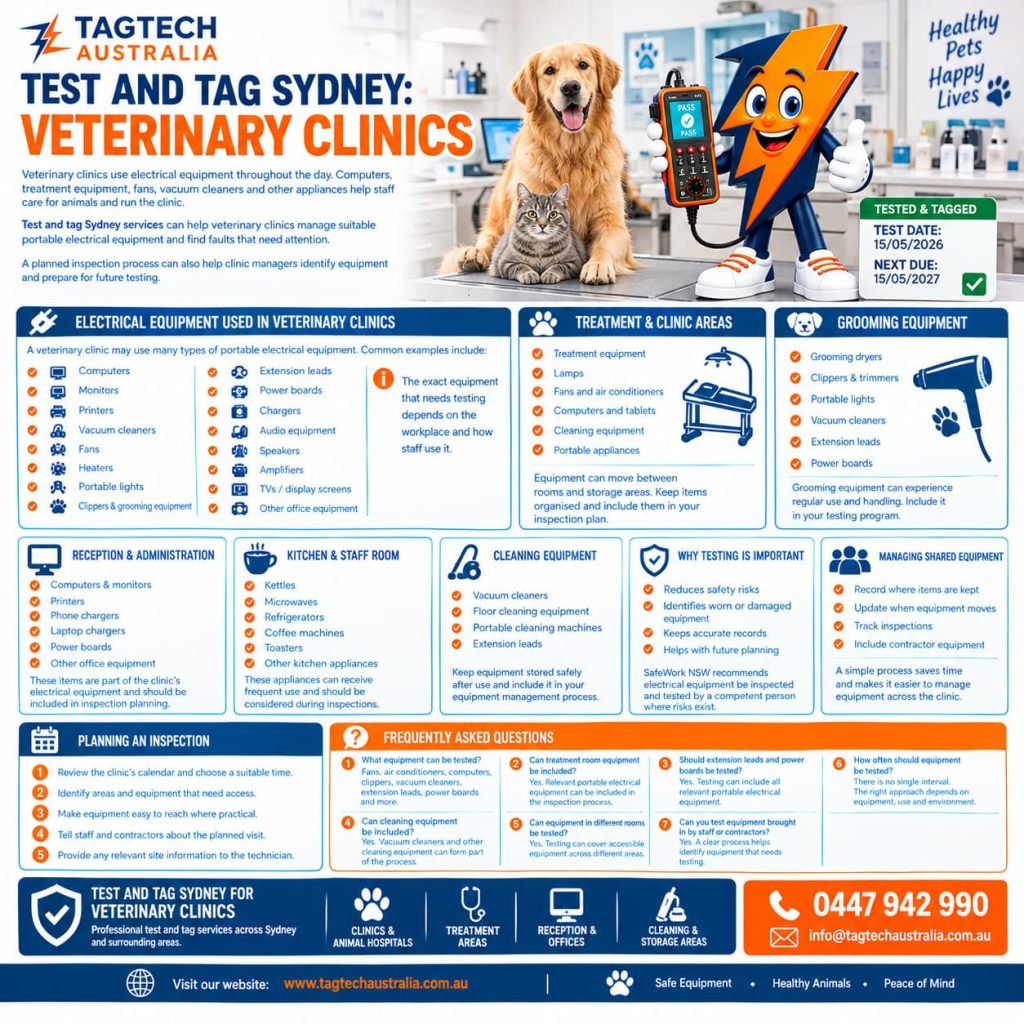
Veterinary clinics use electrical equipment every day. Computers, treatment equipment, fans, vacuum cleaners and other appliances help staff care for animals and run the clinic.
However, veterinary clinics can have busy work areas. Staff may clean floors, move equipment and work around water or other liquids.
Therefore, test and tag Sydney services can help veterinary clinics manage suitable portable electrical equipment and find faults that need attention.
Why Electrical Testing Matters in Veterinary Clinics
A veterinary clinic may use many types of electrical equipment.
For example, staff may use:
- Computers
- Monitors
- Printers
- Vacuum cleaners
- Fans
- Heaters
- Portable lights
- Clippers
- Grooming equipment
- Cleaning equipment
- Extension leads
- Power boards
- Chargers
- Other plug-in equipment
Some items stay in one place. Others move between rooms.
As a result, equipment can experience wear during normal use.
SafeWork NSW says businesses must regularly inspect and test plug-in electrical equipment when its normal use exposes it to conditions that could cause damage or reduce its expected life.
Electrical Equipment in Treatment Areas
Treatment rooms can become busy during the day.
Staff may move equipment between treatment areas. They may also clean surfaces and floors after appointments.
Because of this, some electrical equipment may face extra wear.
Staff should check equipment before use. They should look for:
- Damaged cords
- Broken plugs
- Cracked cases
- Loose parts
- Signs of heat damage
- Other visible damage
If staff find damage, they should remove the equipment from use.
The clinic can then arrange a repair, further check or replacement.
Test and Tag Sydney for Veterinary Equipment
Veterinary clinics can use a range of portable electrical equipment.
For example, staff may use portable lights, clippers, cleaning equipment and other plug-in appliances.
Some equipment may move from one room to another.
Therefore, the clinic should keep track of its portable electrical equipment.
A suitable testing program can help the business identify equipment that needs attention.
Cleaning Equipment
Cleaning is an important part of veterinary work.
Staff may clean treatment rooms, floors, waiting areas and other parts of the clinic throughout the day.
As a result, cleaning equipment can see regular use.
Vacuum cleaners and other plug-in cleaning equipment may also move around the clinic.
Therefore, the clinic should include suitable cleaning equipment in its electrical equipment checks.
SafeWork NSW notes that electrical equipment can face higher risk when workers use it around conditions such as moisture, heat, vibration, mechanical damage, chemicals or dust.
Equipment Used Around Water
Veterinary clinics may use water during cleaning and animal care.
However, electrical equipment and water can create an electrical safety risk.
For this reason, staff should keep electrical equipment away from water where possible.
They should also remove damaged equipment from use.
Where workplace conditions increase the chance of damage, the business should consider the inspection and testing needs of the equipment.
Extension Leads and Power Boards
Extension leads and power boards can help veterinary clinics connect equipment where needed.
However, staff may move these items often.
They can also become damaged if people bend, pull or store them incorrectly.
Therefore, staff should check extension leads and power boards before use.
A suitable testing program can also help identify faults that a normal visual check may not find.
Computers and Office Equipment
Veterinary clinics also rely on office equipment.
Reception staff may use:
- Computers
- Monitors
- Printers
- Payment equipment
- Phones and chargers
- Power boards
- Other office appliances
These items may stay at reception or in staff areas.
Even so, they form part of the clinic’s electrical equipment.
Therefore, the business should keep suitable equipment on its testing records.
Equipment Used by Groomers
Some veterinary clinics also offer grooming services.
Grooming areas may use electrical equipment such as clippers, dryers and other portable appliances.
Staff may move these items throughout the day.
As a result, the equipment can experience regular handling.
The clinic should consider these items when it reviews its electrical equipment testing needs.
What Happens When Equipment Fails?
A failed electrical item should not return to normal use.
Instead, staff should remove it from service.
Next, the clinic can arrange the right action.
Depending on the problem, the business may:
- Repair the equipment.
- Replace the equipment.
- Arrange a further assessment.
- Remove the equipment permanently.
SafeWork NSW says businesses must disconnect or isolate unsafe electrical equipment. The equipment should not return to use until it has been repaired or tested and found safe, replaced or permanently removed.
Keeping Test and Tag Records
Good records can make equipment management easier.
A veterinary clinic can keep records of its electrical equipment testing.
These records can help staff see which items have passed, which items have failed and when the next test should occur.
SafeWork NSW says a testing record should include:
- The name of the person who carried out the test
- The date of testing
- The test result
- The date of the next test
The record may also take the form of a tag attached to the tested equipment.
Therefore, clear records can help staff manage electrical equipment across the clinic.
Planning Testing Around Veterinary Appointments
Veterinary clinics can stay busy throughout the day.
Appointments may run from morning until evening. Some clinics also operate on weekends.
Therefore, businesses should plan electrical testing around their normal schedule.
For example, testing can take place:
- Before appointments begin
- Between busy periods
- During quieter times
- During planned maintenance
- After closing
This approach can reduce disruption for staff and customers.
Why Professional Testing Can Help Veterinary Clinics
A suitable electrical inspection and testing process can help a veterinary clinic manage portable equipment.
It can help the business:
- Find damaged equipment.
- Identify electrical faults.
- Keep testing records.
- Track portable equipment.
- Remove failed items from use.
- Plan future testing.
In addition, clear records can make it easier for staff to check equipment status.
AS/NZS 3760:2022 covers in-service safety inspection and testing of electrical equipment and RCDs. Standards Australia says the standard provides a structured approach to inspection, testing, tagging and record keeping.
The right testing approach depends on the equipment and the conditions in which staff use it.
Test and Tag Sydney for Veterinary Clinics
Tagtech Australia provides professional test and tag Sydney services for veterinary clinics, animal hospitals and other businesses across Sydney.
Our mobile service can help businesses inspect and test suitable portable electrical equipment.
We can test items such as:
- Vacuum cleaners
- Fans
- Extension leads
- Power boards
- Computers
- Office equipment
- Grooming equipment
- Portable appliances
- Other suitable plug-in electrical equipment
The exact equipment that needs testing depends on the workplace and how staff use it.
Is your veterinary clinic due for electrical equipment testing?
Call Tagtech Australia on 0447 942 990 or email info@tagtechaustralia.com.au to arrange test and tag Sydney services for your clinic.
FAQ
How often should a veterinary clinic test electrical equipment?
There is no single testing period for every veterinary clinic.
The right approach depends on the equipment, how staff use it and the workplace conditions.
SafeWork NSW says the frequency of inspection and testing varies according to the nature of the workplace and the risks linked to the electrical equipment.
What equipment can a veterinary clinic test?
A clinic may test suitable plug-in equipment such as vacuum cleaners, fans, computers, grooming equipment, extension leads and power boards.
The exact equipment will depend on the workplace.
Should veterinary grooming equipment be tested?
Yes, suitable plug-in grooming equipment can form part of the clinic’s electrical equipment testing process.
Staff should also check equipment for visible damage before use.
Should extension leads and power boards be tested?
Yes. Extension leads and power boards can form part of a workplace electrical testing program where appropriate.
Staff should also check them for damage before use.
What happens if equipment fails a test?
The clinic should remove the equipment from use.
Next, the business can arrange a repair, further assessment or replacement.
Can staff bring electrical equipment into the clinic?
They can, but the clinic should have a clear process for equipment brought into the workplace.
This can help the business identify equipment that needs inspection or testing.
Who can test electrical equipment?
A competent person should carry out the inspection and testing.
SafeWork NSW says a competent person needs the knowledge and skills to carry out the task through suitable training, qualifications or experience.
Does a test tag replace a visual check?
No.
Staff should still check electrical equipment before use.
A tag provides information about the testing record. However, staff should not use damaged equipment simply because it has a current tag.
Why Businesses Choose Tagtech Australia
✔ Reliable test and tag Sydney services
✔ Clear compliance tagging and digital reports
✔ Flexible scheduling across Sydney NSW
✔ Efficient and professional inspections
✔ Focus on practical workplace safety
We help businesses keep their equipment organised, tested, and safe.
📞 Call 0447 942 990
📧 Email info@tagtechaustralia.com.au
Outbound References (for compliance context)
SafeWork NSW – Electrical Inspection and Testing
SafeWork NSW electrical inspection and testing guidanceSafeWork NSW – Electrical Work
SafeWork NSW electrical safety guidanceStandards Australia – AS/NZS 3760:2022
Standards Australia AS/NZS 3760:2022 information
Experience, Expertise, Authority, and Trust
This guide shows how test and tag Sydney can support electrical equipment safety in veterinary clinics and animal care workplaces. Regular inspection and testing can help businesses find faults and damage early. Each business should review its own equipment, workplace conditions and testing needs when planning inspections.
Tagtech Australia provides professional mobile test and tag services for businesses across Sydney. Our service focuses on suitable portable electrical equipment used in workplaces.

