

Test and Tag Sydney: What Happens When Equipment Fails Inspection
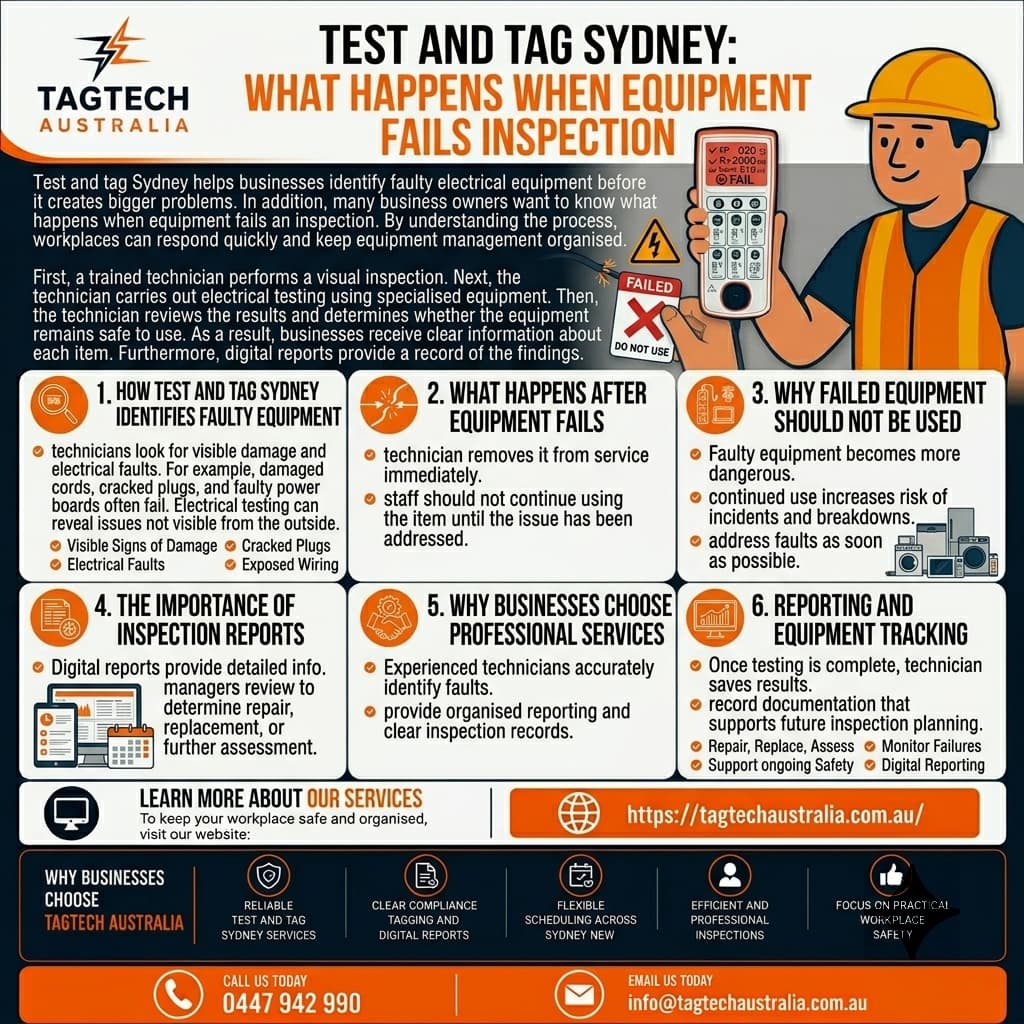
Test and Tag Sydney: What Happens When Equipment Fails Inspection
Test and tag Sydney helps businesses identify faulty electrical equipment before it creates bigger problems. In addition, many business owners want to know what happens when equipment fails an inspection. By understanding the process, workplaces can respond quickly and keep equipment management organised.
First, a trained technician performs a visual inspection. Next, the technician carries out electrical testing using specialised equipment. Then, the technician reviews the results and determines whether the equipment remains safe to use. As a result, businesses receive clear information about the condition of each item. Furthermore, digital reports provide a record of the findings.
How Test and Tag Sydney Identifies Faulty Equipment
During an inspection, technicians look for visible signs of damage as well as electrical faults. For example, damaged cords, cracked plugs, and faulty power boards often fail inspection. In addition, electrical testing can reveal issues that are not visible from the outside.
Common reasons equipment may fail include:
- Damaged power cords
- Broken plugs
- Exposed wiring
- Faulty extension leads
- Failed electrical safety tests
Consequently, businesses can identify problems before the equipment continues in service.
What Happens After Equipment Fails
When equipment fails inspection, the technician removes it from service immediately. Therefore, staff should not continue using the item until the issue has been addressed.
In addition, the technician records the failure in the inspection report. As a result, businesses receive documentation showing why the item did not pass testing.
Why Failed Equipment Should Not Be Used
Faulty equipment can become more dangerous over time. Consequently, continued use may increase the risk of electrical incidents or equipment breakdowns.
Therefore, businesses should address faults as soon as possible. Furthermore, removing damaged equipment helps maintain a safer workplace environment.
The Importance of Inspection Reports
Digital reports provide detailed information about tested equipment. In addition, reports help businesses track failed items and monitor future inspections.
For example, managers can review the report and determine which equipment requires repair, replacement, or further assessment. As a result, equipment management becomes easier and more organised.
Why Businesses Choose Professional Services
Many businesses choose professional providers because experienced technicians understand how to identify faults accurately. Furthermore, professional services provide organised reporting and clear inspection records.
As a result, workplaces receive reliable information that supports ongoing equipment management.
Reporting and Equipment Tracking
Once testing is complete, the technician saves the results in a digital report. In addition, businesses receive records that support future planning and equipment monitoring. Consequently, managers can make informed decisions about maintenance and replacement schedules.
Moreover, organised reporting helps businesses track equipment across multiple locations.
Learn More About Our Services
To keep your workplace safe and organised, visit our website:
Why Businesses Choose Tagtech Australia
✔ Reliable test and tag Sydney services
✔ Clear compliance tagging and digital reports
✔ Flexible scheduling across Sydney NSW
✔ Efficient and professional inspections
✔ Focus on practical workplace safety
We help businesses keep their equipment organised, tested, and safe.
📞 Call 0447 942 990
📧 Email info@tagtechaustralia.com.au

Outbound References (for compliance context)
-
SafeWork NSW electrical safety resources
-
AS/NZS 3760 In-service safety inspection and testing of electrical equipment
Experience, Expertise, Authority, and Trust
This guide shows how test and tag Sydney supports workplace safety. Regular testing helps reduce risk by finding faults early. Each business should check its own setup when planning inspections.

