

Test and Tag Sydney: What Equipment Needs Test and Tag
Test and Tag Sydney: What Equipment Needs Test and Tag
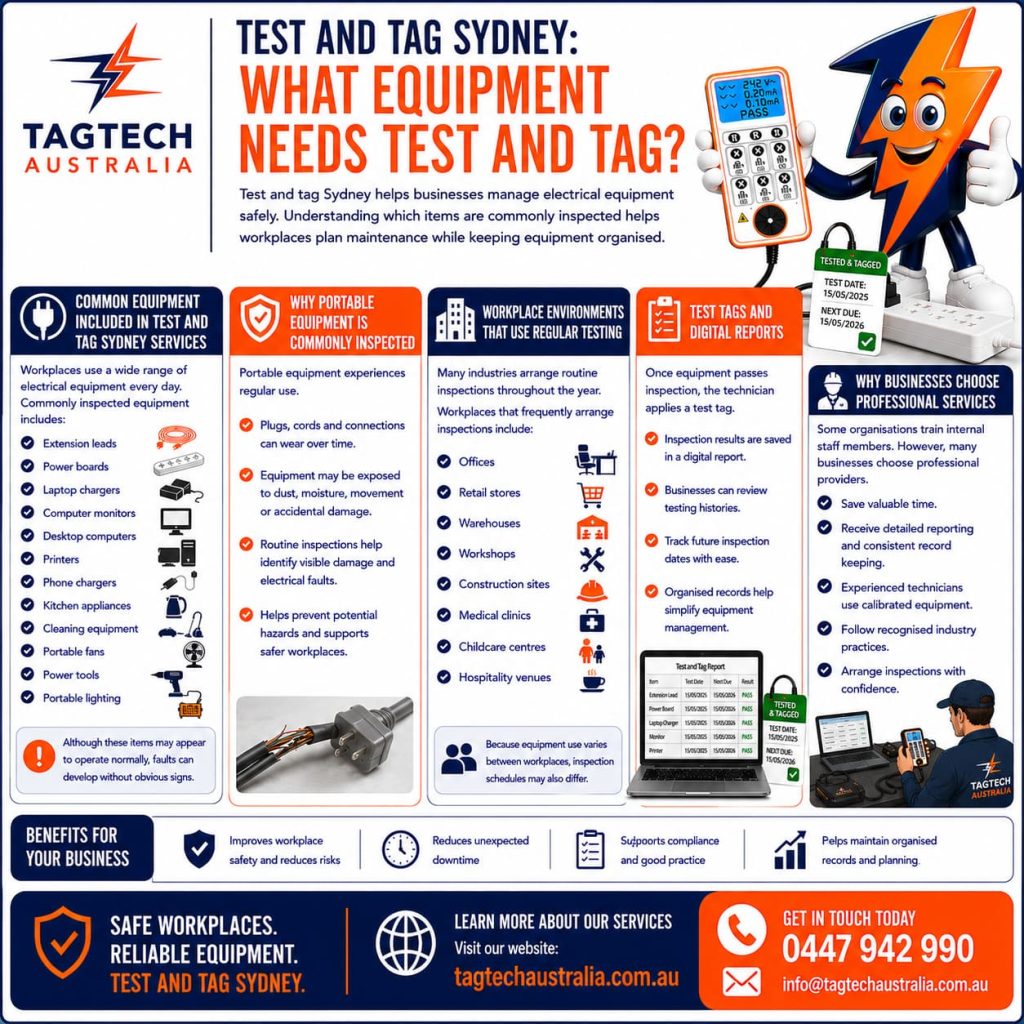
Test and tag Sydney helps businesses manage electrical equipment safely. Many business owners also ask what equipment needs testing and tagging. Understanding which items are commonly inspected helps workplaces plan maintenance while keeping equipment organised.
Portable electrical equipment is often included in routine inspections. Because these items are regularly moved, plugged in, unplugged, or handled by staff, they can experience wear over time. As a result, many businesses schedule regular inspections to help identify faults early.
Common Equipment Included in Test and Tag Sydney Services
Workplaces use a wide range of electrical equipment every day. For example, offices rely on computers and chargers. Meanwhile, workshops often use power tools and extension leads. Since different industries use different equipment, inspection requirements can vary.
Commonly inspected equipment includes:
- Extension leads
- Power boards
- Laptop chargers
- Computer monitors
- Desktop computers
- Printers
- Phone chargers
- Kitchen appliances
- Cleaning equipment
- Portable fans
- Power tools
- Portable lighting
Although these items may appear to operate normally, faults can develop without obvious signs.
Why Portable Equipment Is Commonly Inspected
Portable equipment experiences regular use. For that reason, plugs, cords, and connections can wear over time. In addition, equipment may be exposed to dust, moisture, movement, or accidental damage.
Routine inspections help identify visible damage and electrical faults before they become larger problems. Consequently, businesses can maintain safer workplaces.
Workplace Environments That Use Regular Testing
Many industries arrange routine inspections throughout the year. For instance, offices often inspect computer equipment and chargers. Likewise, warehouses commonly inspect extension leads and portable appliances.
Workplaces that frequently arrange inspections include:
- Offices
- Retail stores
- Warehouses
- Workshops
- Construction sites
- Medical clinics
- Childcare centres
- Hospitality venues
Because equipment use varies between workplaces, inspection schedules may also differ.
Test Tags and Digital Reports
Once equipment passes inspection, the technician applies a test tag. In addition, inspection results are saved in a digital report. As a result, businesses can review testing histories and track future inspection dates.
Furthermore, organised records help simplify equipment management. At the same time, digital reports provide a clear overview of inspected items.
Why Businesses Choose Professional Services
Some organisations train internal staff members. However, many businesses choose professional providers. Not only do they save valuable time, but they also receive detailed reporting and consistent record keeping.
Experienced technicians use calibrated equipment and follow recognised industry practices. Therefore, businesses can arrange inspections with confidence.
Learn More About Our Services
To keep your workplace safe and organised, visit our website:
Why Businesses Choose Tagtech Australia
✔ Reliable test and tag Sydney services
✔ Clear compliance tagging and digital reports
✔ Flexible scheduling across Sydney NSW
✔ Efficient and professional inspections
✔ Focus on practical workplace safety
We help businesses keep their equipment organised, tested, and safe.
📞 Call 0447 942 990
📧 Email info@tagtechaustralia.com.au
Outbound References (for compliance context)
-
SafeWork NSW electrical safety resources
-
AS/NZS 3760 In-service safety inspection and testing of electrical equipment
Experience, Expertise, Authority, and Trust
This guide explains what equipment is commonly included in test and tag Sydney inspections. Regular inspections help businesses identify faults early and maintain organised records. Each workplace should review its own equipment and operating conditions when planning inspections.

