

Test and Tag Sydney: Do Warehouses Need Test and Tag
Test and Tag Sydney: Do Warehouses Need Test and Tag?
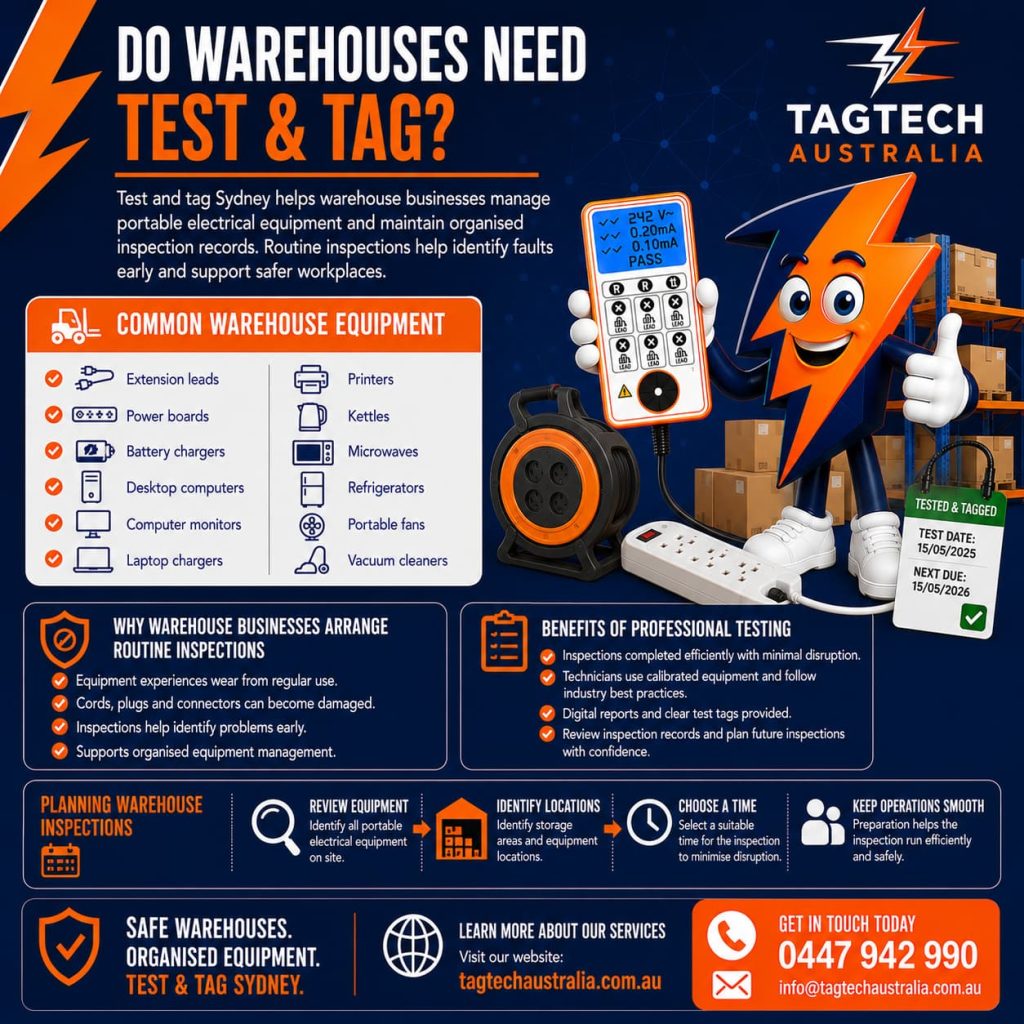
Test and tag Sydney helps warehouse businesses manage portable electrical equipment and maintain organised inspection records. Many warehouse operators also ask whether routine inspections are necessary. Understanding how equipment is used throughout a warehouse helps businesses plan maintenance and support safer workplaces.
Warehouse environments often contain a wide range of electrical equipment. Workers use portable appliances, battery chargers, office equipment, and extension leads throughout the day. Consequently, many businesses include regular inspections as part of their equipment management program.
Common Warehouse Equipment
Warehouses rely on portable electrical equipment to support daily operations. For example, staff may use electrical tools in maintenance areas while office teams operate computers and printers. Likewise, lunchrooms usually contain portable kitchen appliances.
Equipment commonly found in warehouses includes:
- Extension leads
- Power boards
- Battery chargers
- Desktop computers
- Computer monitors
- Laptop chargers
- Printers
- Kettles
- Microwaves
- Refrigerators
- Portable fans
- Vacuum cleaners
Keeping equipment organised helps simplify future inspections and supports accurate record keeping.
Why Warehouse Businesses Arrange Routine Inspections
Electrical equipment experiences normal wear during everyday use. For example, staff move extension leads, connect battery chargers, and unplug portable appliances throughout the working day. Over time, plugs and cords can become damaged without obvious signs. Therefore, routine inspections help businesses identify problems before they interrupt daily operations.
In addition, scheduled inspections support organised equipment management. As a result, warehouse operators can review inspection records more easily. Furthermore, clear documentation helps businesses prepare for future inspections with greater confidence.
Benefits of Professional Testing
Many warehouse businesses choose professional services because they want an efficient inspection process. Rather than asking employees to complete inspections, they can continue focusing on their normal duties. Meanwhile, experienced technicians carry out testing with calibrated equipment while following recognised industry practices.
After the inspection, businesses receive digital reports together with clearly labelled test tags. Consequently, managers can identify inspected equipment quickly. Likewise, organised records simplify future maintenance planning.
Planning Warehouse Inspections
Every warehouse operates differently, so planning ahead makes a noticeable difference. Before the appointment, review the equipment on site and identify storage areas that contain portable appliances. Next, let staff know when technicians will be attending. Finally, place equipment where it can be accessed safely whenever practical.
By following these simple steps, businesses help inspections progress efficiently. As a result, technicians spend less time locating equipment, and daily operations continue with fewer interruptions.
Learn More About Our Services
To keep your workplace safe and organised, visit our website:
Why Businesses Choose Tagtech Australia
✔ Reliable test and tag Sydney services
✔ Clear compliance tagging and digital reports
✔ Flexible scheduling across Sydney NSW
✔ Efficient and professional inspections
✔ Focus on practical workplace safety
We help businesses keep their equipment organised, tested, and safe.
📞 Call 0447 942 990
📧 Email info@tagtechaustralia.com.au

Outbound References (for compliance context)
-
SafeWork NSW electrical safety resources
-
AS/NZS 3760 In-service safety inspection and testing of electrical equipment
Experience, Expertise, Authority, and Trust
This guide explains why many warehouse businesses arrange test and tag Sydney inspections for portable electrical equipment. Although every workplace operates differently, regular inspections help identify faults before they become larger problems. Moreover, organised records simplify equipment management throughout the year. Therefore, every business should review its equipment, operating environment, and inspection schedule when planning future testing.

