

Testing and Tagging Sydney: Do Retail Stores Need Test and Tag
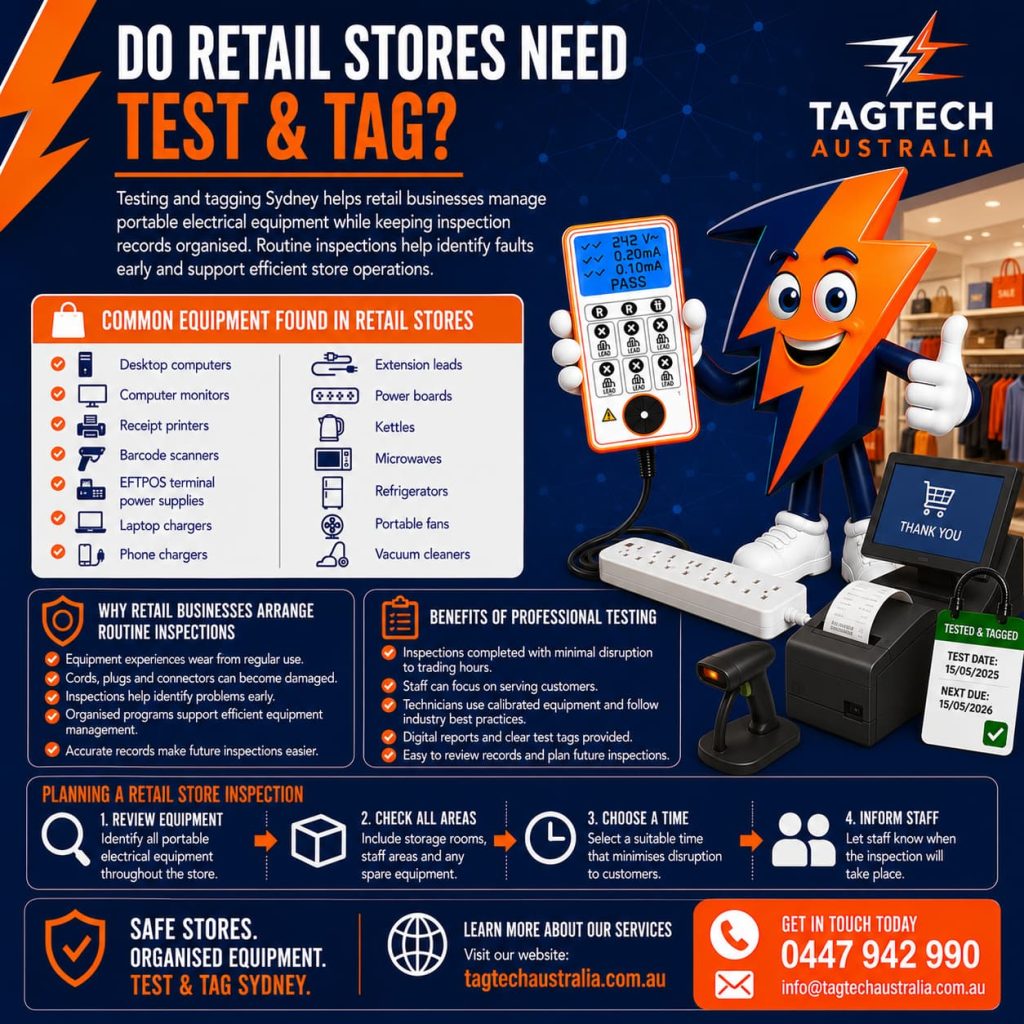
Testing and Tagging Sydney: Do Retail Stores Need Test and Tag?
Testing and tagging Sydney helps retail businesses manage portable electrical equipment while keeping inspection records organised. Many store owners also ask whether retail stores should arrange routine inspections. Understanding how electrical equipment is used throughout a shop helps businesses plan maintenance and manage equipment more effectively.
Retail stores often use electrical equipment from opening until closing time. Staff operate computers, receipt printers, phone chargers, display lighting, and kitchen appliances every day. Consequently, many businesses include routine inspections as part of their workplace maintenance program.
Common Equipment Found in Retail Stores
Retail businesses rely on many portable electrical appliances throughout the day. For example, checkout counters often include computers, monitors, barcode scanners, and receipt printers. Meanwhile, staff rooms usually contain kitchen appliances, while storage areas may have extension leads and portable fans.
Common equipment includes:
- Desktop computers
- Computer monitors
- Receipt printers
- Barcode scanners
- EFTPOS terminal power supplies
- Laptop chargers
- Phone chargers
- Extension leads
- Power boards
- Kettles
- Microwaves
- Refrigerators
- Portable fans
- Vacuum cleaners
Keeping equipment organised makes inspections easier and supports accurate record keeping.
Why Retail Businesses Arrange Routine Inspections
Electrical equipment experiences wear through regular use. Over time, plugs, power cords, and connectors can become damaged without obvious signs. Therefore, routine inspections help businesses identify problems before they interrupt daily operations.
In addition, organised inspection programs help managers monitor testing histories. As a result, future inspections become easier to plan. Furthermore, accurate records simplify equipment management across one or multiple store locations.
Benefits of Professional Testing
Many retail businesses choose professional services because they reduce disruption during busy trading hours. Rather than asking employees to inspect equipment, staff can continue serving customers while technicians complete the testing.
After the inspection, businesses receive digital reports together with clearly labelled test tags. Consequently, managers can identify inspected equipment quickly. Likewise, organised records make future inspections easier to manage.
Planning a Retail Store Inspection
Every retail business operates differently. Before scheduling an inspection, review the equipment throughout the store and identify any appliances located in storage areas or staff rooms. Next, choose a suitable time that minimises disruption to customers. Finally, let staff know when the inspection will take place.
Planning ahead helps technicians work efficiently. As a result, inspections often finish more smoothly while allowing normal business activities to continue.
Learn More About Our Services
To keep your workplace safe and organised, visit our website:
Why Businesses Choose Tagtech Australia
✔ Reliable test and tag Sydney services
✔ Clear compliance tagging and digital reports
✔ Flexible scheduling across Sydney NSW
✔ Efficient and professional inspections
✔ Focus on practical workplace safety
We help businesses keep their equipment organised, tested, and safe.
📞 Call 0447 942 990
📧 Email info@tagtechaustralia.com.au
Outbound References (for compliance context)
SafeWork NSW electrical safety resources
AS/NZS 3760 In-service safety inspection and testing of electrical equipment
Experience, Expertise, Authority, and Trust
This guide explains why many retail businesses arrange testing and tagging Sydney inspections for portable electrical equipment. Although every workplace has different equipment, routine inspections help identify faults early and support organised record keeping. Therefore, each business should review its own equipment and operating environment when planning inspection schedules.

