

Test and Tag Sydney: Electrical Equipment in Community Centres and Clubs
Test and Tag Services Sydney: Community Centres and Clubs
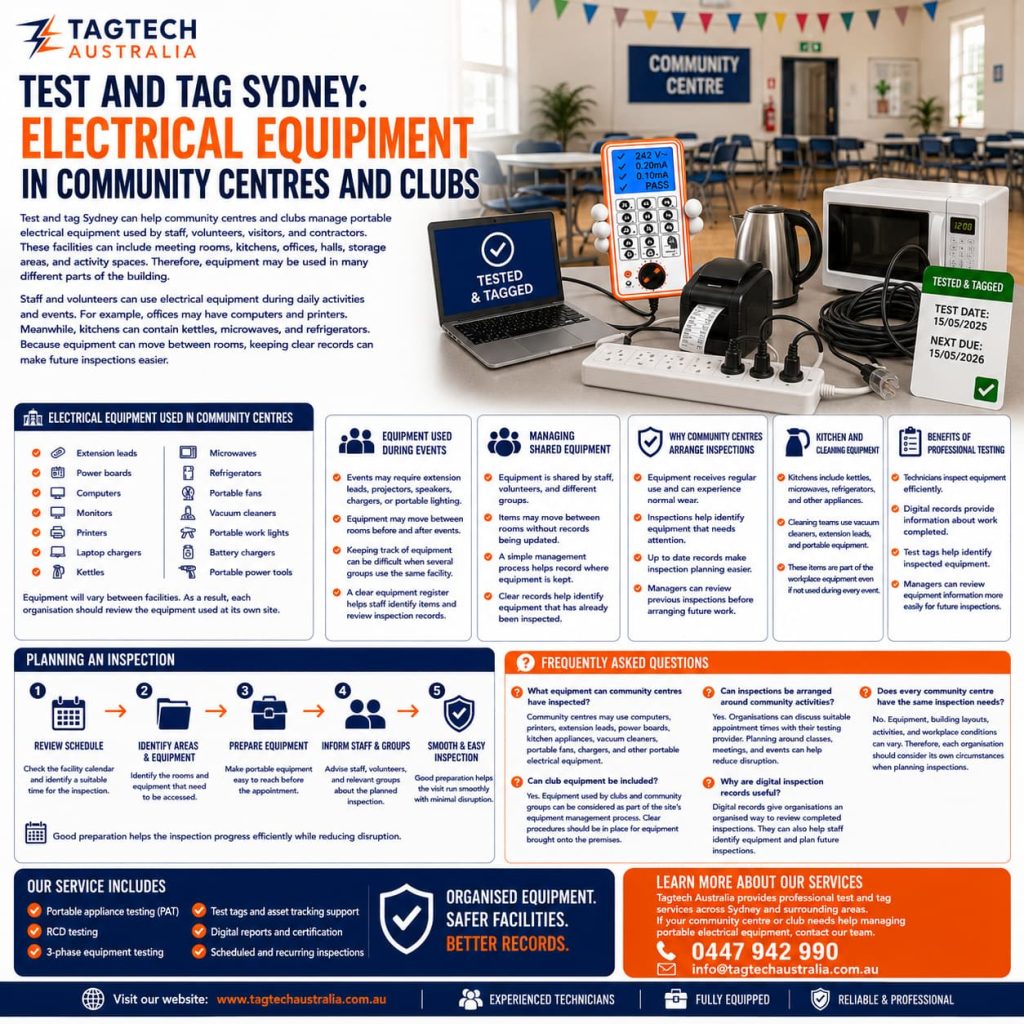
Test and tag services Sydney help community centres and clubs manage portable electrical equipment. These facilities can include meeting rooms, kitchens, offices, halls, storage areas, and activity rooms. Therefore, staff may need to manage electrical equipment across several parts of the building.
Community centres often have staff, volunteers, contractors, and visitors using the same facilities. For example, office workers may use computers and printers. Meanwhile, kitchen areas can contain kettles, microwaves, and refrigerators.
As equipment moves between rooms, clear records can make inspections easier to manage.
Electrical Equipment Used in Community Centres
Community centres and clubs can use many portable electrical items throughout the year. Some equipment stays in one room, while other items move between meeting rooms, halls, kitchens, and storage areas.
Common examples include:
- Computers
- Monitors
- Printers
- Laptop chargers
- Extension leads
- Power boards
- Portable fans
- Vacuum cleaners
- Battery chargers
- Portable work lights
- Portable power tools
- Kettles
- Microwaves
- Refrigerators
Equipment will differ from one facility to another. For this reason, each organisation should review the equipment used at its own site.
A clear equipment list can also help staff find items when an inspection takes place.
Equipment Used During Community Events
Community centres and clubs often hold meetings, classes, fundraisers, sports activities, and social events. These activities can require extra electrical equipment.
For instance, staff may use projectors, speakers, chargers, extension leads, or portable lights. After an event, workers may return these items to storage or move them to another room.
As a result, shared equipment can become harder to track.
A simple equipment record can help staff know where items belong. In addition, the record can show when an item last received an inspection.
Managing Shared Electrical Equipment
Different groups may use the same community facility during the week. Staff, volunteers, clubs, and contractors can all handle portable electrical equipment.
Because of this, clear equipment records can help everyone understand which items belong to the centre. They can also help staff identify equipment that needs attention.
Furthermore, regular record checks can reduce the chance of losing track of equipment.
When an item moves to another room, staff can update its location. This small step can make future inspections easier.
Why Community Centres Arrange Electrical Inspections
Portable electrical equipment can receive frequent use in busy community facilities. Repeated movement, handling, and storage can cause normal wear over time.
For this reason, organisations may arrange regular electrical inspections as part of their equipment management process. In addition, good records can help staff review previous inspection work.
An inspection can also help identify equipment that needs further attention. However, inspection needs can differ between workplaces.
Therefore, each organisation should consider its own equipment, workplace conditions, and relevant requirements.
Kitchen and Cleaning Equipment
Many community centres have kitchens for staff, volunteers, clubs, or visitors. These areas may contain kettles, microwaves, refrigerators, and other portable appliances.
Cleaning teams can also use electrical equipment throughout the building. For example, workers may use vacuum cleaners, extension leads, and portable cleaning equipment.
These items may not form part of an event. Even so, they remain part of the site’s portable electrical equipment.
Consequently, managers should include kitchen and cleaning equipment when reviewing the site’s equipment records.
Benefits of Professional Test and Tag Services
Professional testing allows community centres and clubs to have portable electrical equipment checked efficiently. A technician can work through the equipment while staff continue with their normal duties.
After the inspection, digital records can provide useful information about the work completed. Test tags can also help staff identify equipment that has received an inspection.
Furthermore, organised records can make future planning easier.
As a result, managers can review previous work before arranging the next inspection.
Planning an Inspection
Community centres often have activities running throughout the week. Therefore, managers should consider the centre’s schedule before choosing an inspection time.
First, identify the rooms and equipment that need access. Next, make portable equipment easy to reach where practical.
After that, let staff, volunteers, and regular groups know about the planned visit. This step can help prevent confusion on the day.
Finally, provide the technician with any useful information about the site.
Good preparation can help the inspection move smoothly.
Frequently Asked Questions
What equipment can community centres have inspected?
Community centres may use computers, printers, extension leads, power boards, chargers, kitchen appliances, vacuum cleaners, portable fans, and other portable electrical equipment.
Can club equipment be included?
Yes. Clubs can include their portable electrical equipment in their equipment management process. However, each organisation should decide which equipment it manages and how it keeps its records.
Can inspections work around community activities?
Yes. Organisations can discuss suitable times with their testing provider. Planning around classes, meetings, and events can help reduce disruption.
Why are digital inspection records useful?
Digital records give organisations an easy way to review completed inspections. They can also help staff identify equipment and plan future work.
Does every community centre have the same inspection needs?
No. Each facility can have different equipment, activities, and workplace conditions. Therefore, organisations should consider their own circumstances when planning inspections.
Learn More About Our Services
Tagtech Australia provides professional test and tag services across Sydney and surrounding areas.
We help businesses and organisations manage portable electrical equipment in offices, community facilities, workshops, kitchens, and other workplaces.
If your community centre or club needs help with portable electrical equipment, contact our team.
Phone: 0447 942 990
Email: info@tagtechaustralia.com.au
Why Businesses Choose Tagtech Australia
✔ Reliable test and tag Sydney services
✔ Clear compliance tagging and digital reports
✔ Flexible scheduling across Sydney NSW
✔ Efficient and professional inspections
✔ Focus on practical workplace safety
We help businesses keep their equipment organised, tested, and safe.
📞 Call 0447 942 990
📧 Email info@tagtechaustralia.com.au
Outbound References (for compliance context)
SafeWork NSW electrical safety resources
AS/NZS 3760 In-service safety inspection and testing of electrical equipment
Experience, Expertise, Authority, and Trust
Community centres and clubs can have many people using the same electrical equipment. Staff, volunteers, contractors, and community groups may all use equipment throughout the year.
For that reason, an organised inspection process can help facilities keep better records of portable electrical equipment.
Tagtech Australia provides test and tag services for workplaces across Sydney and surrounding areas. Our service can support organisations that need their portable electrical equipment inspected and recorded.
This article provides general information about electrical equipment inspections. Each organisation should consider its own equipment, workplace conditions, and applicable requirements when planning an inspection program.

